Drywood Termites: Identification, Signs & Treatment
Quick answer
Drywood termites live their entire lives inside dry wood — attic framing, trim, furniture — with no soil contact and no mud tubes. The signature sign is frass: piles of tiny, hard, six-sided pellets pushed out of pin-sized kick-out holes. A single accessible colony can often be handled with spot treatment ($500–$1,500); a widespread or hidden infestation usually calls for whole-structure fumigation ($2,000–$8,000).
Drywood termites break the basic rule of American termite control. Every standard defense — soil barriers, bait stations, mud-tube inspections — assumes termites commute from a nest in the ground. Drywood termites never touch the ground. A colony lives, feeds and reproduces entirely inside the wood it eats, which makes it invisible to the tools that catch subterranean termites — and makes identification the whole game.
This guide covers how to identify drywood termites and tell them apart from subterranean species, the signs that give them away, where in the US they are established, when they swarm, and how to choose between spot treatment and whole-structure fumigation. For the full species landscape, see the types of termites guide.
How Drywood Termites Differ — and Why It Matters
A subterranean termite colony is a fortress in the soil with foraging parties that travel up into your house through mud tubes. Break the connection — a liquid barrier in the soil — and the workers in the wood die off. A drywood colony is the opposite: there is no fortress to attack. The entire colony, from a few hundred to a few thousand individuals, lives inside a single piece of wood, extracting the moisture it needs from the wood itself.
That difference has three practical consequences:
- Colonies are smaller and slower. A mature drywood colony holds a few thousand termites versus hundreds of thousands for subterranean species. Damage accumulates over years, not months — slower than subterranean termites and far slower than the Formosan “super termite”.
- They are much harder to find. No mud tubes, no soil contact, no moisture trails. A colony inside an attic rafter can feed quietly for years before any sign reaches a living space.
- Soil treatments do nothing. Liquid barriers and bait stations are irrelevant to a colony that never touches the ground. Treatment has to reach the wood itself — by injection, heat, replacement or fumigant gas.
They also spread differently. New infestations start when a mated swarmer pair flies in through a vent or under an eave and bores into exposed wood — or when infested furniture, lumber or picture frames are carried into the house.
Identifying Drywood Termites
Swarmers (alates) are the caste you are most likely to see. Drywood swarmers are about 1/2 inch long including wings, with a reddish-brown to tan body and two pairs of equal-length, smoky-tinted wings that they shed after landing. Compare that with subterranean swarmers: smaller (about 3/8 inch), dark brown to black, and typically swarming in daytime after rain.
Soldiers are rarely seen outside the wood. They have pale, eyeless bodies with large, darker, plug-shaped heads and short mandibles — drywood soldiers use their heads to block gallery entrances against ants.
Workers — actually nymphs doing the work — are cream-colored, wingless and soft-bodied, and essentially never leave the galleries. You will not see them unless you break open infested wood.
Drywood vs. subterranean: the comparison that decides treatment
| Drywood termites | Subterranean termites | |
|---|---|---|
| Nesting | Entirely inside dry wood | In soil; workers commute into wood |
| Colony size | Hundreds to a few thousand | Hundreds of thousands |
| Moisture needed | No — lives in dry wood | Yes — needs soil moisture |
| Signature sign | Frass pellets, kick-out holes | Mud tubes on foundations and walls |
| Swarm timing | Late spring through fall; dusk or hot afternoons | Late winter through spring; daytime, often after rain |
| Damaged wood | Clean, smooth galleries | Layered galleries packed with dried mud |
| Damage pace | Slow — years per structural member | Faster; Formosan faster still |
| First-line treatment | Spot treatment or fumigation | Liquid soil barrier or bait stations |
One caveat from the field: in Florida and the Gulf states a house can carry both types at once. Mud tubes on the slab plus frass in the attic means two infestations and two separate treatments. A licensed termite inspection — typically $75–$250, often free with a treatment quote — is what settles the species question.
Signs of Drywood Termites
Because there are no mud tubes, drywood detection comes down to a short list of clues.
Frass — the signature sign. Drywood termites keep their galleries clean by pushing their droppings out of the wood through pin-sized “kick-out holes.” The droppings — called frass — are hard, dry, six-sided pellets about 1 mm long, accumulating in small piles or cones on windowsills, floors or furniture directly below the infested wood. The color varies with the wood being eaten, so frass can look like coarse sand, sawdust or coffee grounds — but unlike sawdust, the pellets are uniform and hard. If you sweep a pile away and it reappears within days, the colony above is active. Full photo identification is in the termite droppings guide.
Kick-out holes. The exit holes themselves are tiny — about the size of a pinhead — and termites often reseal them with a plug of frass. Look for them on trim, window frames, eaves and fascia.
Swarmers and discarded wings. Winged reproductives emerging indoors, or small piles of shed wings on windowsills and near light fixtures, mean a mature colony is in the structure. Drywood swarmers are drawn to light at dusk; details on distinguishing them from other flying insects are in the flying termites guide.
Hollow-sounding or blistered wood. Tap suspect trim and framing with a screwdriver handle: infested wood sounds papery or hollow, and advanced galleries can leave the surface blistered or easy to puncture. Unlike subterranean damage, drywood galleries are clean and smooth inside, with no packed mud.
For the complete checklist across all species, see the signs of termites guide.
Where Drywood Termites Live in the US
Drywood termites are a warm-climate problem, established in a band across the southern tier of the country:
- Florida — the West Indian drywood termite is entrenched in coastal cities from Miami to Tampa and Jacksonville, and tenting is a routine service. See the Florida termite guide.
- California — the western drywood termite infests coastal counties from San Diego through Los Angeles to the Bay Area; it is the reason whole-house tenting is a normal line item in southern California real estate. See the California termite guide.
- The Gulf Coast and Southeast — the southeastern drywood termite is established along the coasts of Texas, Louisiana, Mississippi, Alabama, Georgia and the Carolinas.
- The Southwest and Hawaii — Arizona’s desert communities see mostly drywood rather than subterranean pressure, and Hawaii has some of the heaviest drywood pressure anywhere.
In northern states, drywood termites appear only as hitchhikers in infested furniture or lumber and rarely establish outdoors. The state termite guides cover local species and pressure in detail.
Drywood Termite Swarm Season
Swarming is when a mature colony sends out winged reproductives to start new colonies — and when most homeowners first learn they have a problem. The drywood calendar runs later than the subterranean one: late spring through summer in Florida and the Gulf, with swarmers taking flight at dusk and gathering around lights; summer into early fall in California, often on hot, still afternoons.
A swarm outdoors near your home is a warning sign; a swarm indoors, or fresh piles of shed wings on windowsills, means the colony is already inside the structure. Either way, swarm season is when exposed wood — vents, eaves, gaps in trim — is most vulnerable to new infestation.
Drywood Termite Treatment Options
Treatment splits on one question: how far has the infestation spread? That is why the inspection comes before the quote, and why a legitimate company justifies its scope in writing.
Localized (spot) treatment
When an inspection confirms one or two accessible colonies, targeted treatment works:
- Wood injection — drilling into the galleries and injecting termiticide foam, dust or liquid directly into the colony.
- Heat treatment — raising the infested area (a room or a section of framing) to a temperature lethal to termites.
- Wood replacement — cutting out and replacing an infested beam or trim piece, practical for limited, non-structural damage, and often paired with borate treatment of the surrounding wood.
The catch is coverage: spot methods only kill the colonies they reach, and missing one hidden pocket means the infestation continues.
Whole-structure fumigation (tenting)
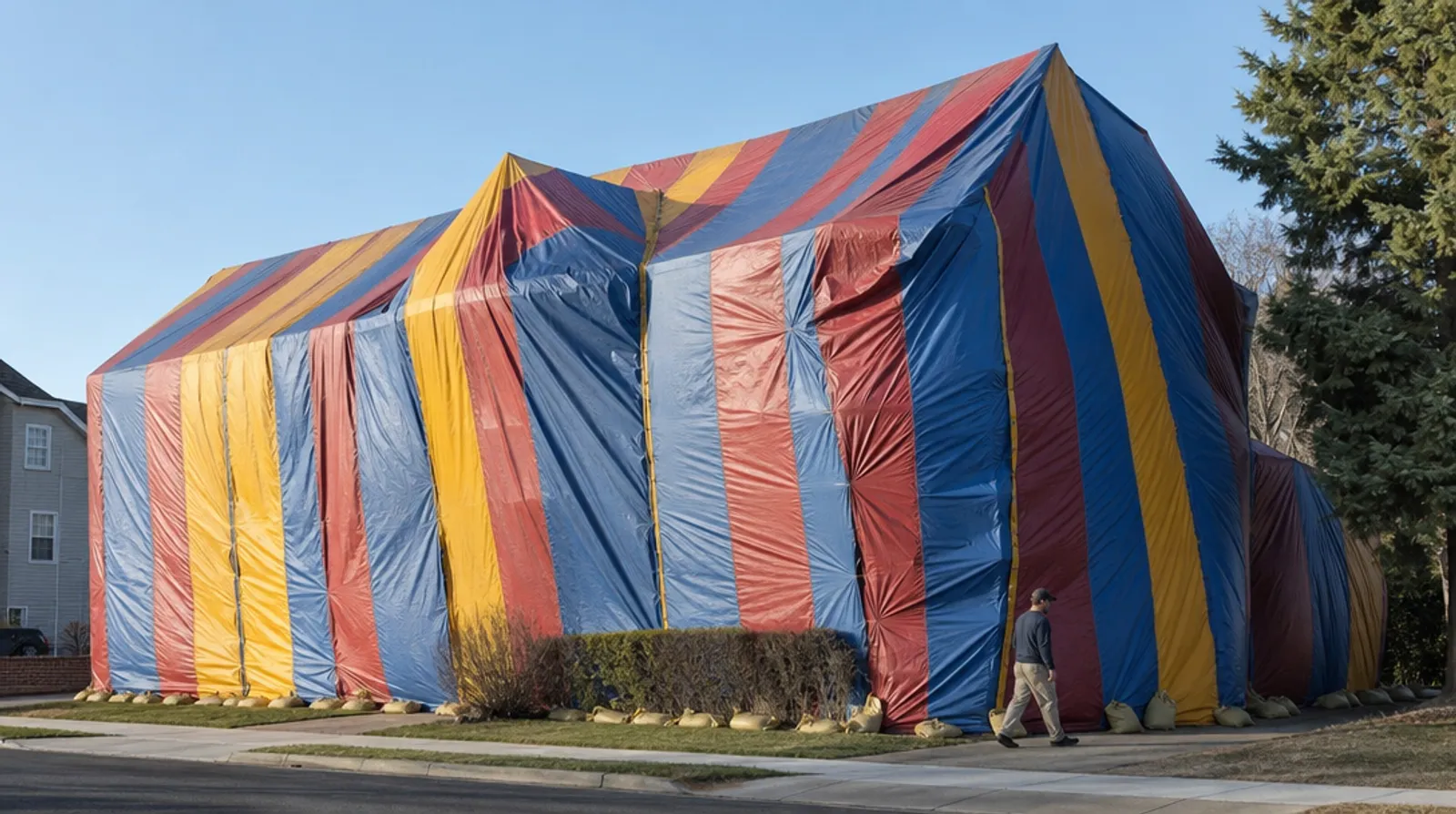
When termites are found in multiple rooms, in inaccessible wall voids or attic framing, or when spot treatments keep failing, fumigation is the reliable answer. The house is sealed under tarps and filled with sulfuryl fluoride gas, which penetrates every piece of wood in the structure — the only method that guarantees a complete kill of every colony at once. The trade-offs: 2–3 days out of the house, significant prep, and zero residual protection afterward. Process, prep checklist and pricing are in the termite fumigation guide.
What treatment costs
| Treatment | Typical cost (US) | When it fits |
|---|---|---|
| Professional inspection | $75–$250 | Always the first step; often free with a treatment quote |
| Spot / localized treatment | $500–$1,500 | One or two confirmed, accessible colonies |
| Wood replacement (per area) | $300–$1,000 | Limited, reachable, mostly cosmetic damage |
| Whole-house fumigation | $2,000–$8,000 | Widespread, hidden or recurring infestations; priced by structure volume |
The expensive mistake is under-scoping: spot-treating a widespread infestation two or three times typically costs more than tenting once, and the termites keep eating between visits. For the full price landscape across all methods and species, see the termite treatment cost guide.
Preventing Drywood Termites
Prevention is about denying swarmers a place to land and bore in:
- Seal entry points. Caulk gaps around window and door frames, seal cracks in trim and fascia, and repair damaged roofing and eaves — swarmers need only a small opening to exposed wood.
- Screen the vents. Fit fine-mesh screens over attic, gable and crawl-space vents; these are the most common flight paths into a house.
- Keep wood painted or sealed. Paint, varnish and sealant make wood far less attractive for colony founding; exposed, weathered wood is the preferred target. Pressure-treated lumber resists infestation in exposed applications.
- Watch what you bring in. Inspect secondhand furniture, reclaimed lumber and firewood before carrying them inside — hitchhiking colonies are how drywood termites reach places outside their range.
- Get a pre-purchase inspection. Drywood damage is a standard finding in coastal real estate, and most lenders in high-pressure states require a wood-destroying-organism report at closing — background is in the termite letter guide.
- Inspect annually. In drywood territory, a yearly professional inspection is the closest thing to early detection that exists — colonies caught in year one or two are spot-treatment problems; colonies caught in year five are fumigation problems.
If you have found frass, swarmers or hollow wood, the next steps are a professional identification and a scoped quote. The termite treatment guide walks through every method, and the types of termites guide helps you confirm what you are actually dealing with before anyone starts drilling.
Frequently asked questions
Are drywood termites worse than subterranean termites?
Do drywood termites always need fumigation?
Can I treat drywood termites myself?
How fast do drywood termites damage a house?
Where in the US are drywood termites found?
Do drywood termites come back after treatment?
Last updated: 2026-08-24