Termite Bait Stations vs Liquid Treatment: Pros & Cons
Quick answer
Liquid termiticide creates a treated soil zone that kills or repels termites on contact — fast, cheaper upfront ($4–$12 per linear foot), protection for 5–10 years. Bait stations use slow-acting toxicants that workers carry back to eliminate the whole colony — less invasive, no drilling, but slower and dependent on ongoing monitoring ($1,200–$3,200 installed plus annual service). Both are proven; many professionals use them together.
Liquid barrier or bait stations is the oldest argument in termite control — and both sides are right, for different houses. The two methods attack the same problem with opposite strategies: one fortifies the perimeter, the other feeds the colony a poison it cannot detect.
This guide compares the two head to head — mechanism, speed, cost over five years, invasiveness, environmental footprint and the situations where each clearly wins — so a sales pitch cannot make the decision for you. Cost context: the termite treatment cost guide.
How Each Method Works
Liquid termiticide barriers
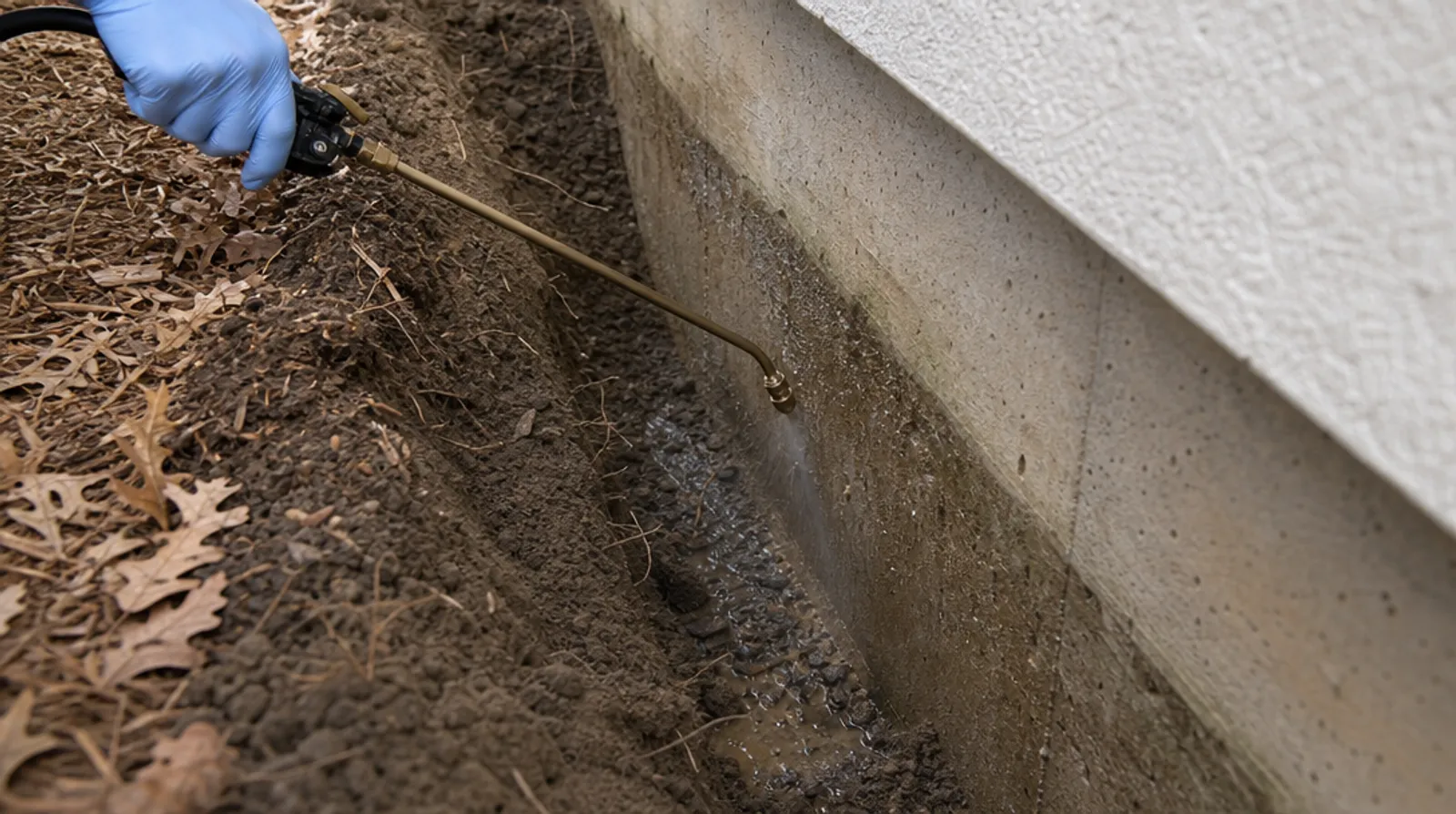
A technician trenches or drills around the foundation and injects termiticide into the soil, creating a continuous treated zone between the colony and the house. Modern products are mostly non-repellent: termites cannot sense the barrier, tunnel straight through it, pick up the active ingredient (commonly fipronil or imidacloprid) and transfer it to nestmates through grooming and food sharing. The barrier kills foragers immediately and suppresses the colony indirectly.
Application on a typical home takes a few hours. Expect drilling through patios, driveways or garage slabs where concrete meets the foundation — holes are patched afterward but may stay visible.
Termite bait stations
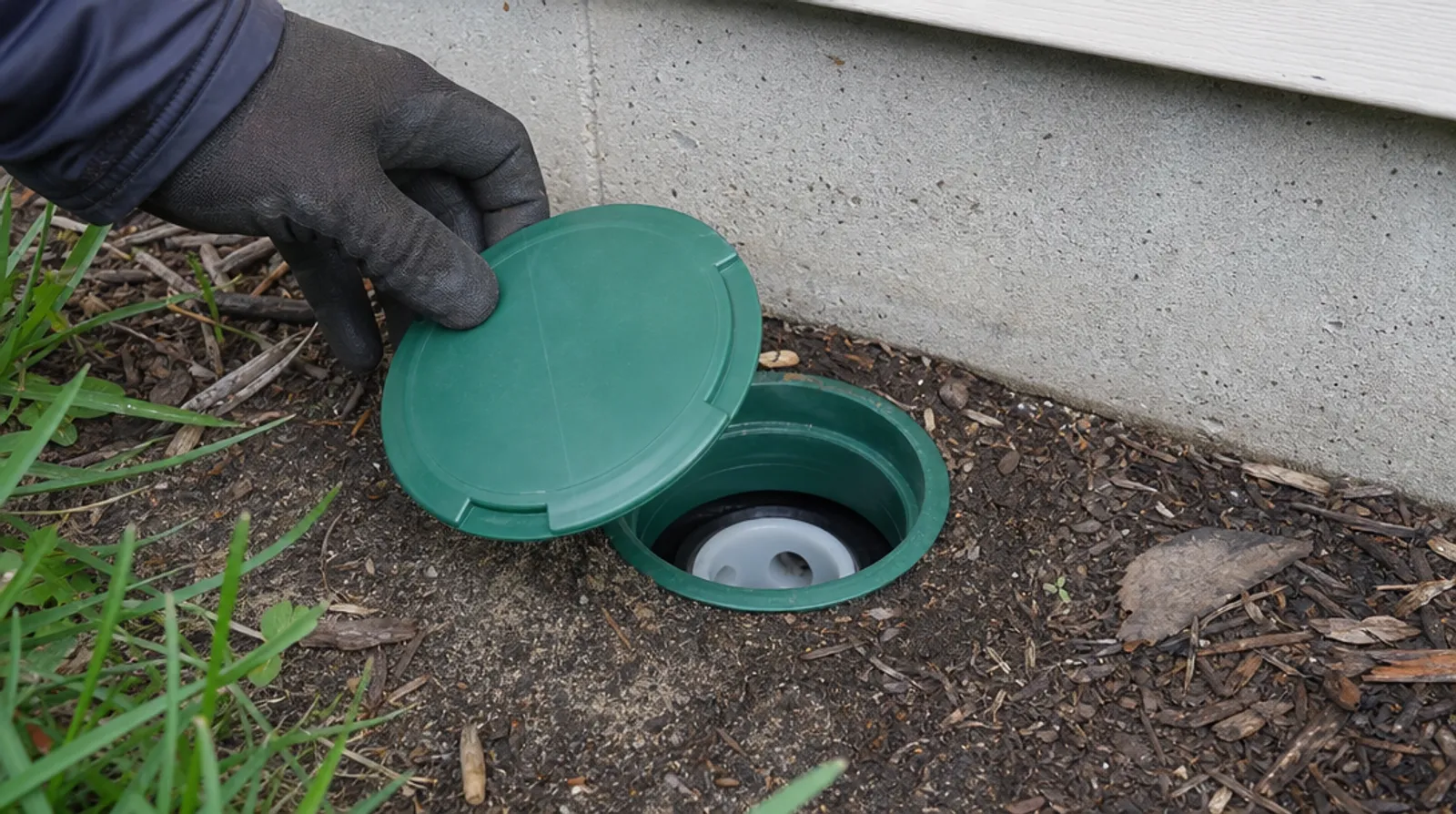
In-ground stations are placed every 10–15 feet around the perimeter, loaded with wood or cellulose bait. Foraging workers find a station, feed on bait laced with a slow-acting growth regulator, and carry it back to the colony. Because the toxicant delays death, it spreads through the nest before workers die — and when the queen stops getting fed, the entire colony collapses, not just the termites that touched the product.
That is the fundamental difference: liquid kills termites at the wall, bait kills the colony at the source. The trade-off is time — colony elimination typically takes weeks to a few months, and stations only work while someone keeps checking and refilling them.
Bait Stations vs Liquid: Side-by-Side
| Factor | Liquid barrier | Bait stations |
|---|---|---|
| How it kills | Contact + transfer at the barrier | Colony elimination via shared bait |
| Speed of protection | Immediate | Weeks to months |
| Upfront cost | $4–$12 per linear ft ($800–$2,000 typical) | $1,200–$3,200 installed |
| Ongoing cost | None required | $250–$500/yr monitoring contract |
| Protection lifespan | 5–10 years per application | Only while serviced |
| Invasiveness | Trenching + drilling through slabs | Small stations in the yard |
| Chemical volume | 100+ gallons around the home | Grams of bait, contained in stations |
| Effect on colony | Suppresses; colony may survive | Designed to eliminate the colony |
| Best for | Active infestation needing fast stop | Long-term prevention, sensitive sites |
Cost Comparison Over 5 Years
Sticker price misleads here — bait looks expensive on day one, liquid looks cheap, and then the monitoring contract flips the math. Typical U.S. ranges:
| Scenario | Year 1 | Years 2–5 | 5-year total |
|---|---|---|---|
| Liquid barrier (1,800 sq ft home) | $800–$2,000 | $0 (optional retreat warranty $100–$300/yr) | $800–$2,000 |
| Bait system, professionally monitored | $1,200–$3,200 | $250–$500/yr × 4 | $2,200–$5,200 |
| DIY bait stations (materials only) | $150–$400 | $50–$150/yr refills | $350–$1,000 |
Whole-home termite treatment overall runs $225–$2,500 for chemical or bait methods, with fumigation for drywood termites priced separately at $2,000–$8,000. Actual quotes depend on foundation type, linear footage, and how much drilling the job needs — always compare at least two or three written estimates.
When Liquid Treatment Wins
- Active infestation in the house now. Liquid stops foragers within days; bait may take a season. With visible damage or swarmers inside, speed matters more than elegance.
- You want set-and-forget protection. A good non-repellent barrier protects for 5–10 years with no contract, no quarterly visits, no renewal fees.
- Budget is tight. Lower upfront cost and no mandatory annual fee.
- New construction pre-treatment. Treating soil before the slab is poured is cheap, standard practice, and not a job bait can do.
When Bait Stations Win
- Drilling is a problem. Wells near the foundation, decorative hardscaping, finished basements, radiant-floor slabs, or a homeowner who simply refuses holes in the stamped concrete.
- You want the colony dead, not just blocked. Barriers can have gaps; a surviving colony keeps probing until it finds one. Bait removes the colony from the equation entirely.
- Chemical volume is a concern. A barrier puts 100+ gallons of diluted termiticide into the soil. Bait uses grams of active ingredient sealed inside tamper-resistant stations — a meaningful difference near ponds, gardens or play areas.
- Hard-to-treat construction. Homes with wells, cisterns, sub-slab heating ducts or drainage systems sometimes cannot legally or practically receive a full liquid treatment.
DIY Termite Bait Stations — Are They Worth It?
Consumer-grade stations are sold at home improvement stores and online, and the “best DIY termite bait stations” question comes down to expectations. As a monitoring tool for a home with no current problem, they are reasonable: bury them around the perimeter, check monthly, and you get early warning. As a treatment for an active infestation, they underperform — consumer kits use weaker baits, and misreading a station is easy. If you find live termites or signs like mud tubes or swarmers, get a professional termite inspection (typically $75–$250, often free with a treatment quote) before betting the house on a DIY kit.
Can You Combine Both Methods?
Yes — and many professionals do exactly that. A common hybrid: liquid treatment on the side of the house with the active problem, bait stations elsewhere for ongoing monitoring and colony elimination. Some companies also install bait after a barrier treatment as an early-warning system. If a company pushes hard for one method and dismisses the other entirely, that usually tells you which contract they make more money on, not which treatment your house needs.
Longevity and Maintenance
How long do termite bait stations last?
The stations themselves are durable plastic and stay in the ground for years, replaced only if a lawnmower or frost heave damages one. The consumable part is the bait cartridge — an active colony can strip a station in a matter of weeks, so cartridges are swapped as they are eaten. But the honest answer to “how long does protection last” is: exactly as long as the service contract runs. Stop monitoring and the system becomes yard decoration within a season.
How often should bait stations be checked?
Typically every 1–3 months in the first year after installation, then quarterly once any activity is eliminated. Missed checks are the number-one reason bait programs fail — an empty or moldy station intercepts nothing. If you DIY, put a recurring reminder on your phone; consistency is the whole job.
How long does a liquid barrier last?
Labels and field studies put modern non-repellent barriers at 5–10 years of effective protection, though companies often warranty only 1–5 years. Soil type, rainfall and whether landscaping work disturbs the treated zone all shorten real-world life. Any digging against the foundation — new irrigation lines, replanting, drainage repairs — breaks the barrier and that section should be retreated.
How to Choose: Questions to Ask Before Signing
- Which product class and active ingredient will you use, and why for my foundation type?
- What exactly does the warranty cover — retreatment only, or damage repair too?
- For bait: what is the monitoring schedule, and what happens if I cancel the contract?
- For liquid: how many linear feet are you treating, and where will you drill?
- Is the quoted price all-in, or are monitoring and renewals extra?
Licensing rules, required disclosures and typical pricing differ by state — check our state termite control guides for your state’s regulations and local cost ranges. For a broader look at every option beyond these two, see the termite treatment methods guide.
Frequently asked questions
Do termite bait stations really work?
Which is cheaper long-term, bait or liquid?
How long do termite bait stations last?
How often should termite bait stations be checked?
Is liquid termite treatment safe for pets and kids?
Can I install termite bait stations myself?
Does bait or liquid work on drywood termites?
Last updated: 2026-08-19