Termite Inspection Cost: What's Included & How It Works
Quick answer
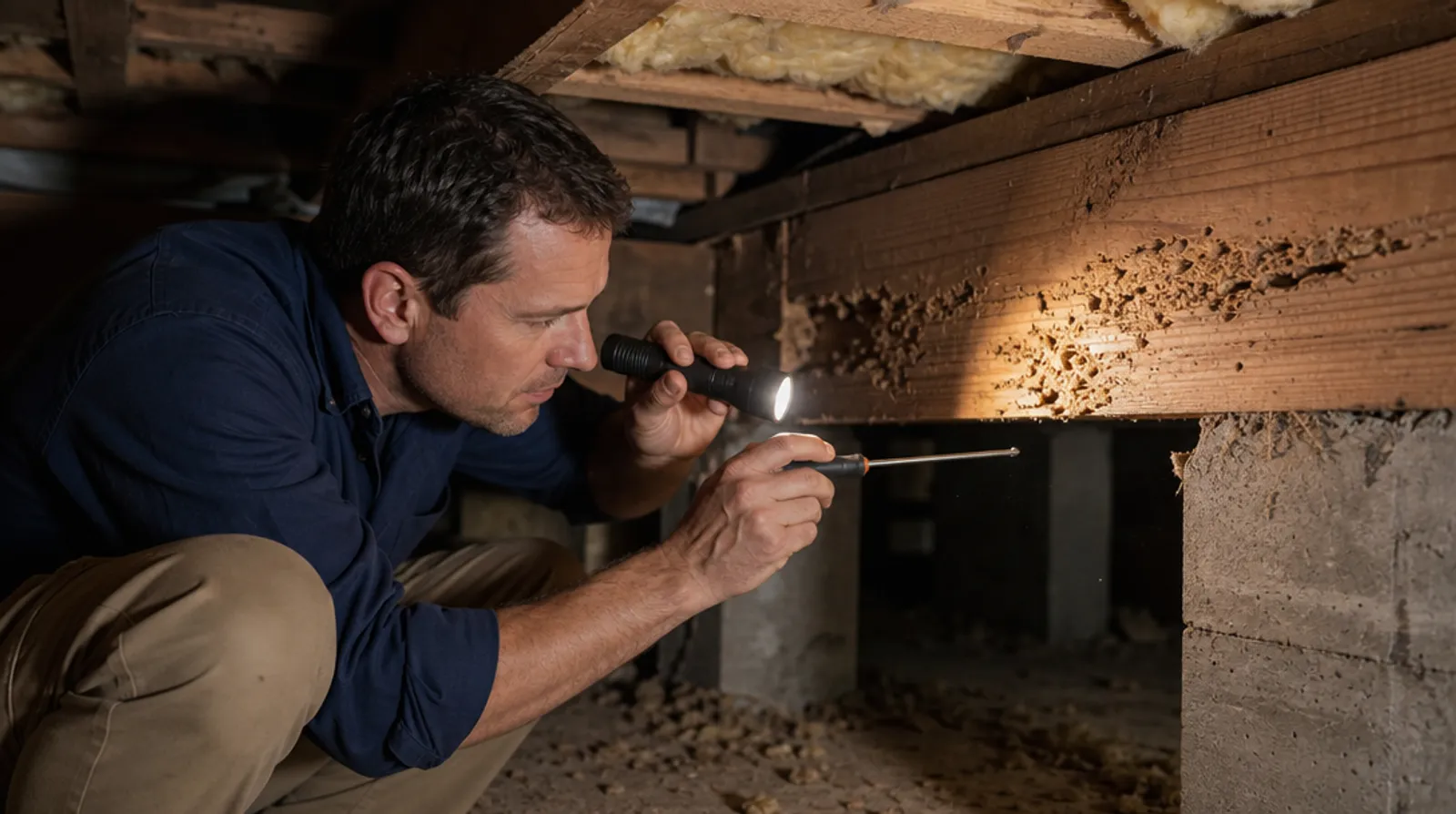
A termite inspection costs $75–$325 as a standalone service, and most companies inspect free when you are shopping for treatment. An inspector spends 45–90 minutes checking the foundation, crawl space, attic, garage and all wood-to-soil contact points, then documents findings — for real-estate closings, on the official WDI/WDIR form.
A termite inspection is the cheapest insurance in homeownership: an hour of a trained inspector’s time against a repair bill that can reach five figures. In heavy-pressure states, annual inspections are the baseline, not the exception.
This guide covers what an inspection costs, what the inspector actually does area by area, how to read the findings and what changes when the inspection is for a real-estate closing. For the closing document itself, see what is a termite letter.
How Much Does a Termite Inspection Cost?
Most homeowners pay between $75 and $325 for a standalone termite inspection, with the national average sitting around $100–$150 for a typical single-family home. The price depends almost entirely on why you need the inspection:
| Inspection type | Typical cost |
|---|---|
| Free quote inspection (no written report) | $0 |
| Standalone general inspection | $75–$325 |
| WDI/WDIR inspection for a closing (official report included) | $75–$250 |
| Annual inspection under a termite bond | Usually included in the bond fee |
| Re-inspection after treatment | Often included in the treatment warranty |
Free vs paid inspections
Many termite companies advertise free inspections, and they are genuinely free — but understand the product. A free inspection is a sales call: the company hopes to sell you treatment, so the visit is typically shorter, and you get a verbal answer or a one-page quote rather than a documented report. That is perfectly fine if you suspect activity and want a professional opinion before committing.
A paid inspection buys you documentation and, in theory, more independence. The inspector has no treatment to sell you, and the written report holds up in negotiations, disputes and closings.
WDIR inspections for closings
The version lenders require — a wood-destroying insect inspection recorded on the official state form or the national NPMA-33 — is almost always a paid service, typically $75–$250. The paperwork and the liability that comes with signing it are what you are paying for. Details on the form itself are in our termite letter guide.
What moves the price
- Home size and layout — more square footage, additions and detached structures take more time.
- Crawl space access — tight or obstructed crawl spaces add time; some companies charge extra or decline them.
- Location — prices run higher in dense metros and in high-pressure states where demand is constant.
- Urgency — same-day or next-day scheduling for a closing often carries a rush fee.
What Does a Termite Inspection Include?
A proper inspection is systematic: the inspector works around the exterior, then through every accessible interior space where termites could enter or feed. Expect the visit to cover all of the following:
| Area | What the inspector looks for |
|---|---|
| Foundation and exterior walls | Mud tubes, cracks, wood-to-soil contact, moisture at the slab edge |
| Crawl space or basement | Tubes on piers and walls, damaged joists and sill plates, standing moisture |
| Attic and roof framing | Drywood termite evidence, damaged rafters, frass (droppings) |
| Interior rooms | Baseboards, window and door frames, bubbling paint, hollow-sounding wood |
| Garage, porches and decks | Support posts, steps, ledger boards, any untreated lumber |
| Yard and outbuildings | Fences, sheds, stumps, firewood stacks, mulch beds against the house |
Inspectors tap and probe suspicious wood with a screwdriver or awl, use a moisture meter on walls and framing, and increasingly carry infrared cameras or termite-detection devices for walls they cannot open. You do not need to prepare much — clearing access to the attic hatch, crawl-space entry and the garage walls speeds things up.
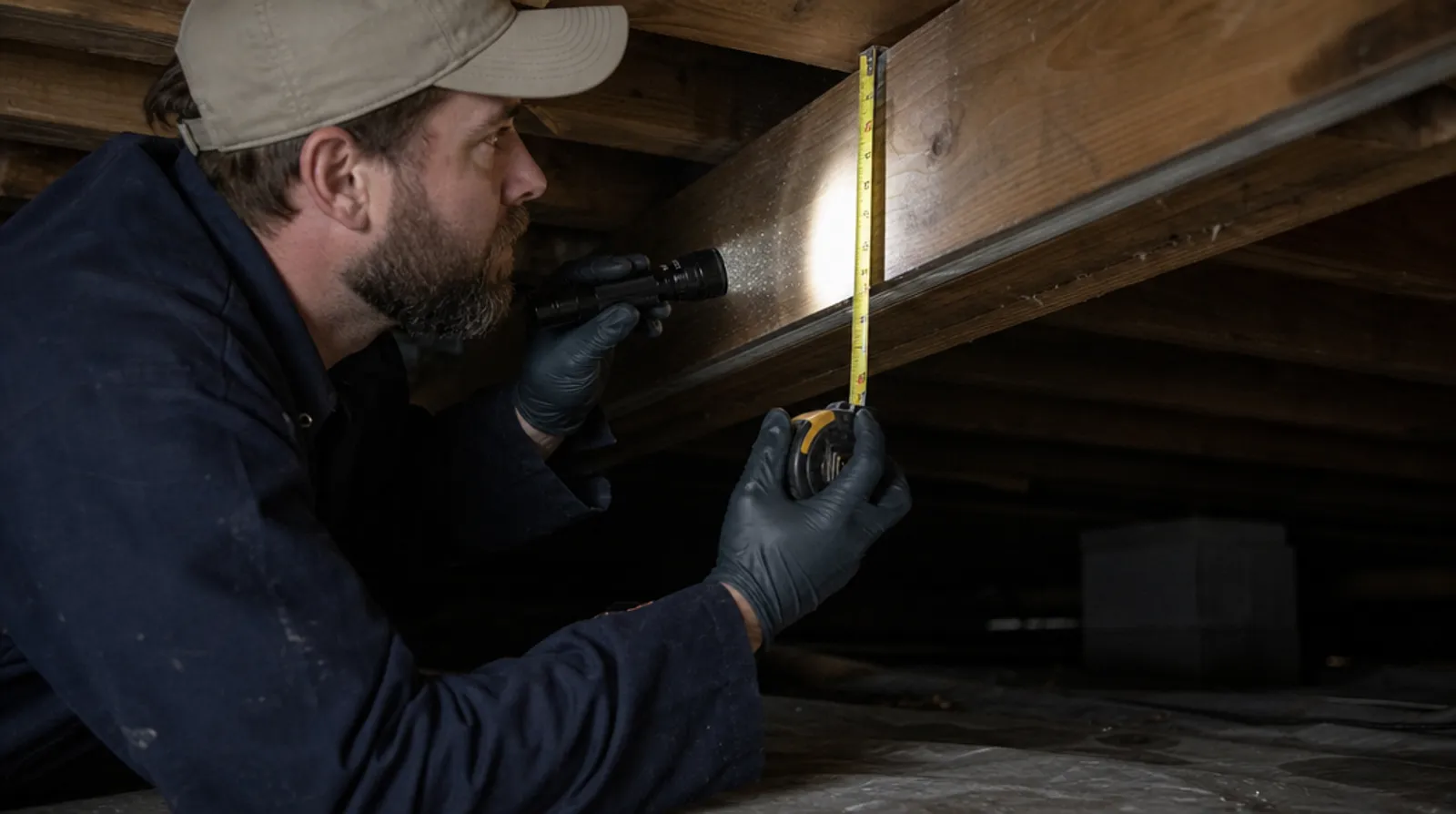
If the inspector finds activity, the next step is treatment — our guides on termite treatment options and termite treatment cost walk through what comes after a positive finding.
How Long Does a Termite Inspection Take?
Typically 45–90 minutes for an average single-family home. Plan on up to two hours for large homes, homes with crawl spaces, or properties with multiple outbuildings. The written report usually arrives the same day for a paid inspection; WDIR paperwork for a closing can take 24–48 hours.
How Often Should You Schedule an Inspection?
- High-pressure states (Florida, Texas, the Gulf Coast, Hawaii, most of the Southeast and Southwest): once a year.
- Moderate-risk states: every 1–2 years.
- Low-risk northern states: every 2–3 years, or after any nearby termite activity.
- Homes with a history of termites or an active bond: annually, regardless of region — most bonds include it.
Termite pressure varies enormously by geography, so check your state page for local species, swarm season and risk level before deciding on a schedule.
Reading the Report: What the WDIR Tells You
A WDI report separates findings into distinct categories, and the distinction matters:
- Live infestation — active termites or fresh tubes found. Treatment is needed before most lenders will fund.
- Evidence of a previous infestation — old tubes, treatment drill holes or prior damage, with no live activity. Usually not a closing blocker, but worth monitoring.
- Damage — structural or cosmetic harm attributed to wood-destroying insects, whether or not activity remains.
- Conducive conditions — things that invite termites: wood-to-soil contact, poor drainage, mulch against siding, cellulose debris in the crawl space.
- Inaccessible areas — spaces the inspector could not enter. A long list here weakens the report’s value; ask what it would take to open them up.
A “clear” report is not a warranty. It records what was visible on the day of inspection — termites can be active behind finished walls and leave no surface trace. For ongoing protection, a termite bond pairs annual inspections with a retreatment or repair guarantee.
Inspections for Real Estate Closings
When a lender is involved, the inspection becomes a formal document with rules attached:
- VA loans require a wood-destroying insect inspection on the NPMA-33 form in most states. Who may pay for it has shifted over the years — current rules are more flexible — so confirm with your lender.
- FHA and conventional loans typically trigger a termite inspection only when the appraiser notes evidence of infestation or damage.
- Cash purchases need no inspection at all — but skipping one on a home in a high-pressure state is a false economy.
Who pays is negotiable and follows local custom: sellers commonly provide the WDIR in the Southeast, buyers pay more often elsewhere. Either way, the report must come from a licensed pest-control company — a general home inspector’s note is not a substitute. State-by-state requirements and who issues these reports locally are covered on our state pages.
DIY Checks vs Professional Inspection
You can and should walk your own property a couple of times a year. Look for pencil-width mud tubes on the foundation, swarmers or discarded wings on windowsills, and wood that sounds hollow when tapped — the full checklist is in our signs of termites guide.
What a DIY check cannot do: access the crawl space safely, read moisture patterns, tell old evidence from fresh activity, or produce a document anyone at a closing table will accept. Professionals find problems homeowners miss — industry rule of thumb is that a large share of infestations show no signs visible from living spaces. Use DIY checks as an early-warning habit between professional visits, not a replacement for them.
Choosing a Termite Inspection Company
A few filters separate solid inspectors from quote-chasers:
- Verify the license. Every state licenses pest-control operators; look up the company and the individual applicator in your state’s public registry (linked from our state pages) before booking.
- Ask what the fee includes — written report, photos, moisture readings, the official WDIR form if you need one.
- Ask about crawl spaces and attics. A company that inspects only “accessible areas” from the doorway is not inspecting.
- Get two or three quotes for any paid inspection, and be skeptical of an inspection that always ends in a treatment sale.
- Check whether the inspection fee credits toward treatment if activity is found — many companies apply it.
Termite Inspection FAQ
How much does a termite inspection cost?
Expect $75–$325 for a standalone inspection. Many termite companies offer free inspections when treatment is on the table, but the documented WDIR version required for a real-estate closing is almost always a paid service, typically $75–$250.
What does a termite inspector actually check?
Foundation walls and piers for mud tubes, crawl spaces and basements, attic framing, window and door trim, garage walls, porches and any wood touching soil. Inspectors probe suspicious wood and check moisture levels, since moisture invites subterranean termites.
How long does a termite inspection take?
Typically 45–90 minutes for an average single-family home. Large homes, homes with crawl spaces or extensive outbuildings can take up to two hours. You usually get the written report the same day or within 24–48 hours.
How often should you get a termite inspection?
Once a year in high-pressure states such as Florida, Texas, the Gulf Coast, Hawaii and much of the Southeast and Southwest. Every 2–3 years is usually enough in low-risk northern states — and annually regardless of region if the home has a history of termites or sits under a termite bond.
Is a termite inspection covered by homeowners insurance?
No. Insurers treat termites as preventable maintenance, so neither the inspection nor any termite damage is covered by a standard homeowners policy. Prevention — inspections and, where needed, treatment — is entirely the owner’s responsibility.
Does the VA require a termite inspection?
Yes, in most states a VA loan requires a wood-destroying insect inspection documented on the NPMA-33 form. FHA and conventional loans typically require one only when the appraiser flags evidence of infestation. Requirements vary by state and lender, so confirm with your loan officer.
Who pays for the termite inspection when selling a house?
It is negotiable and follows local custom — sellers commonly provide the WDIR in the Southeast, while buyers pay more often elsewhere. Either way it runs $75–$250 and must be performed by a licensed company to be valid for closing.
Can I do my own termite inspection?
A DIY walkthrough can catch obvious signs — mud tubes, swarmers, discarded wings, damaged wood — but homeowners routinely miss crawl-space and attic evidence. For a real-estate closing only a licensed inspector’s report counts anyway, so treat DIY checks as an early-warning habit, not a substitute.
Frequently asked questions
How much does a termite inspection cost?
What does a termite inspector actually check?
How long does a termite inspection take?
How often should you get a termite inspection?
Is a termite inspection covered by homeowners insurance?
Does the VA require a termite inspection?
Who pays for the termite inspection when selling a house?
Can I do my own termite inspection?
Last updated: 2026-08-19