How Much Does Termite Treatment Cost?
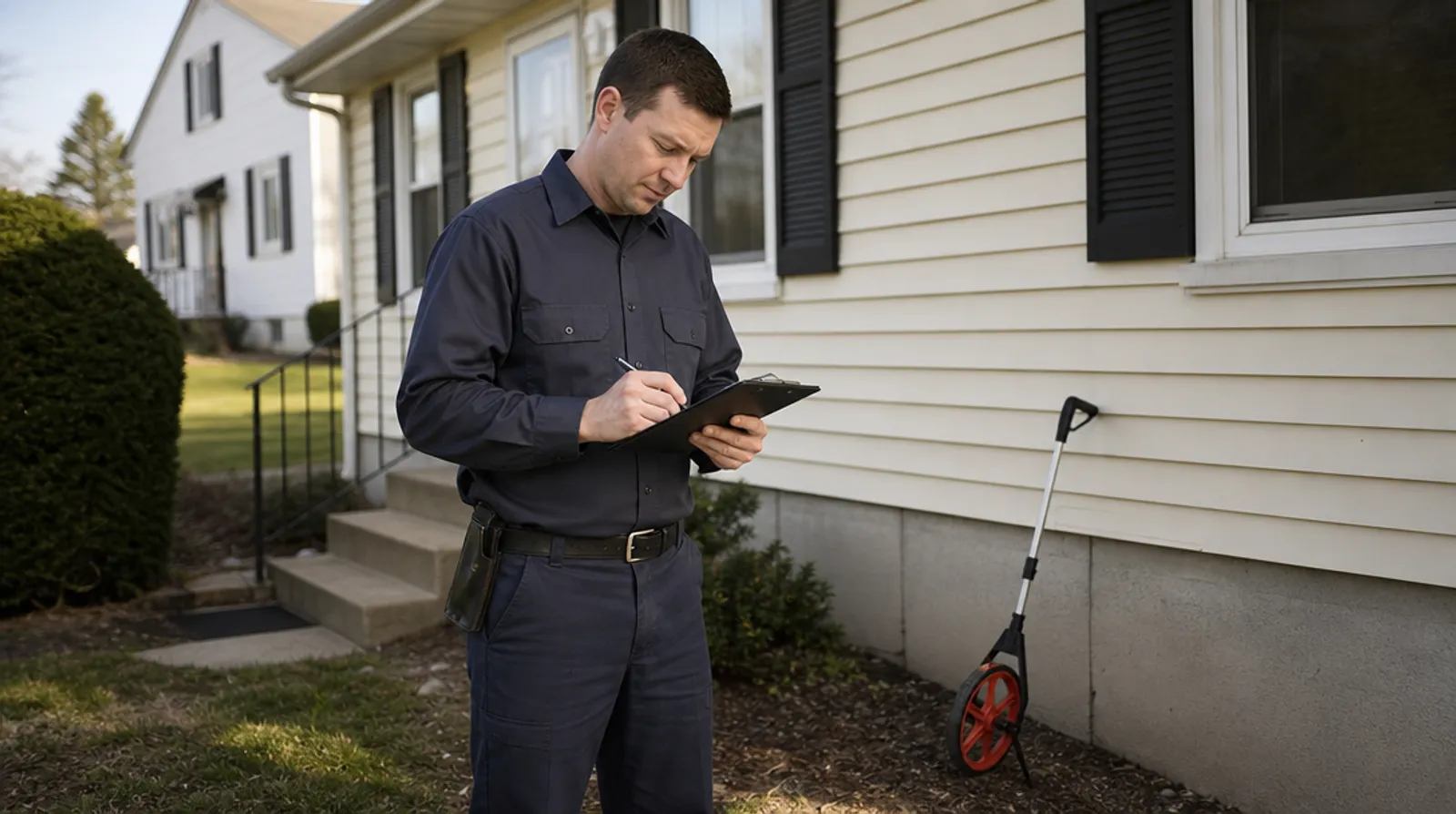
Quick answer
Most homeowners pay $225–$2,500 for termite treatment. Liquid soil barriers run $4–$12 per linear foot (typically $800–$2,000 for an average home), bait station systems $1,200–$3,200 installed plus $250–$500 a year to monitor, and whole-structure fumigation $1,500–$8,000. The species and the size of the infestation set the final number.
Termite treatment pricing confuses homeowners because the same house can legitimately get quotes that differ by thousands of dollars — the method, the species and the contract terms move the number more than the company does.
This guide breaks costs down the way the industry prices them: per linear foot for liquid barriers, installed-plus-monitoring for bait systems, per cubic foot for fumigation — with tables by method and by termite type, and the questions that keep a quote honest. Prices by state are collected on the state pages as verified data comes in.
Average Termite Treatment Cost by Method
On average, the cost of termite treatment in the US falls between $225 and $2,500 per treatment for the two most common methods — liquid soil barriers and bait station systems. Whole-house fumigation and heat treatment sit well above that range because they treat the entire structure at once.
| Method | Typical cost | How it’s priced | Best for |
|---|---|---|---|
| Liquid soil barrier (termiticide) | $800–$2,000 | $4–$12 per linear foot | Subterranean termites |
| Termite bait stations | $1,200–$3,200 installed | $7–$12 per linear foot + $250–$500/yr monitoring | Subterranean termites, long-term control |
| Tenting & fumigation | $1,500–$8,000 | ~$1–$4 per cubic foot | Widespread drywood termites |
| Heat treatment (whole house) | $2,000–$6,000 | Flat rate by home size | Drywood termites, chemical-free option |
| Spot / local treatment (foam, liquid, orange oil) | $200–$600 | Per area treated | Small, localized drywood activity |
| Termite inspection (pre-treatment) | $75–$250 | Flat fee, often free with treatment | Confirming species and extent |
| Termite bond / annual protection plan | $500–$2,000 initial | Annual renewal $200–$400 | Ongoing protection, real-estate peace of mind |
Liquid soil treatment: $4–$12 per linear foot
The workhorse of termite control. A technician trenches or drills around the foundation and applies a liquid termiticide that creates a treated zone termites can’t cross without picking up a lethal dose. Cost per linear foot for termite treatment typically runs $4–$12, and since an average home has 150–250 linear feet of foundation, most full-perimeter jobs land between $800 and $2,000. Drilling through slabs, porches and garages adds labor and pushes quotes toward the top of the range. A professionally applied barrier usually lasts 5–10 years.
Bait station systems: $1,200–$3,200 plus annual monitoring
Termite bait stations are installed in the ground around the home every 10–20 feet. Foraging termites find the bait, carry the active ingredient back to the colony and the colony collapses over weeks to months. Expect $7–$12 per linear foot of perimeter installed, or roughly $1,200–$3,200 for a typical home, plus $250–$500 per year for the monitoring contract — the system only works while someone checks and rebaits the stations. The full comparison of the two classes of products is in our liquid vs. bait guide.
Fumigation (tenting): $1,500–$8,000
The whole house is sealed under a tent and filled with fumigant gas that penetrates every piece of wood. Pricing is usually $1–$4 per cubic foot of the structure, so a 1,500 sq ft single-story home might cost $1,500–$3,000 while a large two-story can reach $6,000–$8,000. It’s the most expensive option and the most disruptive — you vacate for 2–3 days — but it’s often the only reliable answer to a widespread drywood infestation. Prep, timeline and what happens during the tent are covered in the fumigation guide.
Heat treatment: $2,000–$6,000
A chemical-free alternative for drywood termites: heaters raise the interior of the home (or a single room) to 120–140°F for several hours, lethal to termites at all life stages. Whole-house heat treatment cost typically runs $2,000–$6,000. It leaves no residual protection and can’t treat soil, so it’s a drywood-only tool.
Spot and local treatments: $200–$600
Foams, injected liquids and orange-oil treatments applied directly to a known, accessible infestation — a window frame, a section of baseboard, one piece of furniture. At $200–$600 this is the cheapest professional treatment, but it only works when the infestation is small, drywood-only and fully reachable. Treating a visible spot while a subterranean colony keeps working under the slab is the classic false economy.
What Affects the Cost of Termite Treatment
Two houses on the same street can get quotes thousands of dollars apart. These are the variables that actually move the number:
- Species. Subterranean termites are treated from the soil (cheaper, predictable pricing); drywood termites live inside the wood and may require fumigation or heat (expensive). See the types of termites guide to know which one you have.
- Size and extent of the infestation. A single mud tube caught early versus years of hidden feeding in wall voids — treatment scales with the spread, and so does the damage repair cost, which nationally averages $1,000–$3,000 for minor repairs and far more for structural work.
- Foundation type and size of the home. Linear footage of the perimeter sets the liquid price; square/cubic footage sets fumigation and heat prices. Slab homes often need drilling; crawl spaces add labor.
- Construction obstacles. Attached garages, porches, patios and chimneys interrupt the treatment zone and add drilled footage.
- Contract terms. A one-time treatment is cheaper than the same treatment bundled with a multi-year warranty or termite bond ($500–$2,000 initial, $200–$400/yr renewal). Whether that ongoing cost is worth it depends on your local termite pressure.
- Region and local competition. Labor rates and termite pressure vary by state — coastal South and Southwest markets price differently from the Midwest. Rules, licensing and typical prices are collected in our state guides.
Termite Treatment Cost by Termite Type
| Termite type | Usual treatment | Typical cost range |
|---|---|---|
| Subterranean | Liquid barrier or bait stations | $800–$2,500 |
| Formosan (aggressive subterranean) | Liquid + bait combination, larger colonies | $1,200–$3,500 |
| Drywood (localized) | Spot treatment, foam, heat | $200–$1,500 |
| Drywood (widespread) | Fumigation or whole-house heat | $1,500–$8,000 |
| Dampwood | Fix moisture source + local treatment | $500–$2,000 |
Subterranean termites: $800–$2,500
The most common and the most predictable to price — soil treatment or baits handle them, and the cost tracks the home’s perimeter. Formosan termites, the aggressive subterranean species common in the Gulf South and Hawaii, build much larger colonies; treatment often combines a liquid barrier with bait stations and runs higher.
Drywood termites: $200–$8,000 depending on spread
Drywood pricing is bimodal: catch them in one window frame and a $200–$600 spot treatment ends it; find pellets in three rooms and you’re pricing fumigation at $1,500–$8,000. This is why a proper termite inspection ($75–$250, often credited toward treatment) matters before you compare quotes — “termite treatment” means very different jobs for these two scenarios.
Dampwood termites: $500–$2,000
Mostly a Pacific coastal issue. The fix is part pest control, part moisture repair — replace the wet, damaged wood and treat locally. If a quote for dampwood termites looks like a fumigation quote, get a second opinion.
Preventative Termite Treatment Cost
Treating before there’s an infestation is dramatically cheaper than treating after one:
- Pre-construction soil treatment (new builds): typically $0.50–$1.00 per square foot of footprint, or $300–$900 for an average new home — often required by code in high-pressure states.
- Preventative bait station installation on an existing home: the same $1,200–$3,200 installed cost as curative baiting, but with nothing to repair.
- Annual inspection + monitoring plan: $200–$400 per year, which is the real “termite insurance” most homeowners end up choosing.
For context: the average termite infestation treatment cost plus repair bill runs into the thousands, while prevention stays in the hundreds. In high-pressure states — Florida, Texas, the Gulf Coast, Southern California — prevention usually wins the math.
Signs You Should Budget for Treatment
Don’t wait for a swarm. The signs of termites that justify an inspection call right now: mud tubes on foundation walls, discarded wings on windowsills, hollow-sounding or blistered wood, and drywood pellets (frass) that look like small piles of sawdust or coffee grounds. An inspection at $75–$250 is the cheapest line item in this entire guide — and every legitimate company quotes treatment only after inspecting.
Getting Estimates Without Getting Burned
Termite control cost quotes vary widely between national franchises and local operators. National brands like Terminix and Orkin typically price liquid treatment for an average home at $1,000–$2,500 with a service contract attached — competitive, but always get the local-alternative quote too; independent operators in your state frequently match the treatment for less. Our Terminix vs. Orkin comparison walks through franchise pricing and when local companies are the better deal.
Questions to ask every company before signing:
- What species did you find, and where exactly? (Ask them to show you.)
- Is the quote priced per linear foot or flat — and what’s included in the footage?
- What product is being applied, and can I see the label?
- What does the warranty cover — retreatment only, or damage repair too? Is it transferable to a buyer?
- What are the annual renewal or monitoring fees after year one?
- Are you licensed in this state? (Verify the license number against your state’s regulator — linked from our state pages.)
Get at least two written quotes itemized the same way. A quote that skips the inspection, refuses to name the product or bundles an unrequested multi-year contract into the headline price is a quote to walk away from.
Termite Treatment and Selling a House
If you’re selling, budget for the paperwork too: most lenders and buyers in termite-prone states require a wood-destroying insect report — commonly called a termite letter, WDIR, NPMA-33 or clearance letter — which costs $75–$250 on top of any treatment. Active findings usually must be treated before closing. Details and every name the document goes by are in the termite letter guide.
Estimate your treatment cost
A rough national estimate from the price bands in our treatment cost guide. The real number is set by an on-site inspection — always get at least two written quotes.
Frequently asked questions
How much does termite treatment cost per linear foot?
Is fumigation worth the cost?
How long does termite treatment last?
Is termite treatment covered by homeowners insurance?
Is termite treatment safe for pets and kids?
Can I sell a house with termites or past termite damage?
What is the cheapest way to treat termites?
Last updated: 2026-08-21