Termite Damage: How to Spot It and What to Do Next
Quick answer
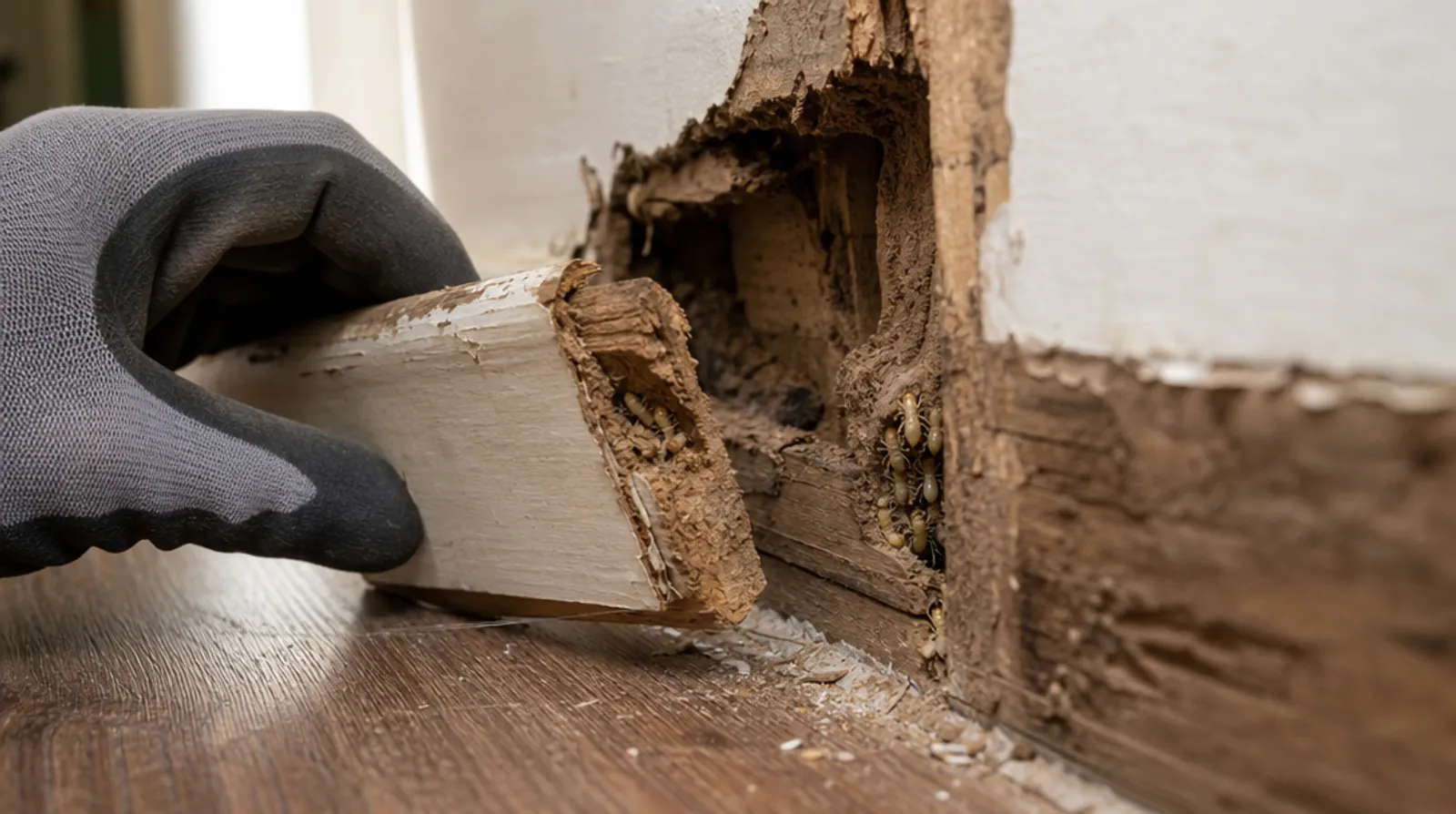
Termite damage looks like hollowed or honeycombed wood, sagging floors, buckling paint and mud tubes feeding the area. Probe suspect wood with a screwdriver — infested wood collapses into layered galleries. If damage is confirmed, treat the colony first and repair second; homeowners insurance almost never covers either bill.
Termites eat a home slowly and quietly — a mature colony consumes roughly a pound of wood a day, and the damage compounds for years before it surfaces. Catching it early is the difference between a repair bill and a renovation.
This guide shows what termite damage looks like at each stage, how to tell it apart from rot and other pests, and how to judge whether it’s active or historical. For prevention, see the termite inspection guide; for what repairs run once damage is confirmed, see the termite damage repair cost guide.
What Does Termite Damage Look Like?
Subterranean termites eat wood along the grain, hollowing it into thin-walled honeycomb galleries that are often packed with mud. Drywood termites carve smoother galleries across the grain and push out pellet-like droppings (frass). In both cases the wood can look perfectly normal from the outside — the damage is inside.
Early signs
- Mud tubes on foundation walls, piers or joists — pencil-width earthen tunnels termites build to stay moist while they travel.
- Hollow sound when you tap baseboards, window frames or studs; a screwdriver pressed against the wood sinks in easily.
- Frass piles — tiny hexagonal pellets that look like sawdust or coffee grounds under drywood termite kick-out holes (detailed identification in the termite droppings guide).
- Discarded wings near windowsills and doors after a swarm.
For a full walkthrough of pre-damage warning signs, see signs of termites.
Termite damage in drywall and under paint
Termites eat the paper facing of sheetrock, not the gypsum. Look for faint maze-like trails under the paint film, small pinholes, bubbling or buckling paint that mimics water damage, and walls that sound papery when tapped. Paint that blisters with no plumbing nearby is a classic flag — moisture from termite activity builds up behind the film.
Structural damage
Advanced damage shows up as sagging or springy floors, doors and windows that suddenly stick, cracked ceiling lines, and visibly eaten joists, sill plates or support posts. At this stage the question is no longer cosmetic — it’s whether the framing still carries its load.
Termite Damage vs. Wood Rot vs. Other Pests
Misidentification is common, because all three leave soft, damaged wood. The differences:
| Cause | What the wood looks like | Telltale extras |
|---|---|---|
| Termites | Honeycomb galleries; subterranean galleries lined with mud, drywood galleries smooth and clean | Mud tubes, frass pellets, swarmers or wings |
| Wood rot (dry rot / wet rot) | Soft, spongy or crumbly wood; breaks across the grain in cubes; often darker or discolored | Mushroom-like fungal growth, musty smell, no galleries or insects |
| Carpenter ants | Smooth, clean galleries that look sanded | Coarse sawdust (frass with insect parts), large black ants nearby |
| Carpenter bees | Neat round ½-inch entry holes, usually on eaves, decks and fascia | Sawdust below the hole, bees hovering in spring |
A simple field test: probe the wood with a screwdriver. Termite wood collapses into layered galleries with mud; rot just mushes. When in doubt, treat it as termites until an inspection proves otherwise — rot doesn’t spread on its own once moisture is fixed, but termites keep eating. The deeper comparison — including why the treatment response is completely different — is in termite damage vs wood rot.
New vs. Old Termite Damage: How to Tell
Finding damage during a remodel or a pre-purchase inspection doesn’t automatically mean live termites. Clues that damage is active:
- Mud tubes that are moist and intact (break one open — workers repairing it within days means an active colony).
- Live, cream-colored workers or soldiers inside opened galleries.
- Fresh frass reappearing after you clean it up.
- New swarms or discarded wings in the same area.
Signs damage is old: dry, crumbling galleries with no mud, no live insects across multiple checks, faded or repaired-over tubes, and a documented past treatment. Even then, old damage matters twice — it can still be structurally weak, and it proves the home is in termite territory, so ongoing protection (and often a termite bond) is worth considering.
Where Termite Damage Hides
Damage concentrates wherever wood meets soil or moisture:
- Foundation and crawl space — sill plates, rim joists and floor joists are the most common structural targets.
- Inside the house — wall studs behind drywall, door and window frames, subfloors under kitchens and bathrooms.
- Decks and porches — posts set in soil and deck boards close to grade; deck damage is often the first visible sign on a property.
- Wood siding and trim — especially where siding touches soil or where gutters leak.
- Trees and stumps — termites in a yard tree aren’t an emergency by themselves, but a colony in a stump near the house is a staging ground. Termite damage in trees shows as mud tubes on the bark and hollowed, mud-packed sections in dead limbs.
How Bad Is It? Assessing the Damage
Severity breaks into three practical tiers:
- Cosmetic — trim, baseboards, drywall paper, a deck board or two. Repair is straightforward.
- Moderate — non-structural framing eaten (a few studs, a section of subfloor). Repairable without engineering, but the colony must be confirmed dead first.
- Structural — joists, sill plates, beams, posts or roof framing compromised. Sagging floors, sticking doors throughout the house and visible gallery work in load-bearing wood put you here.
If you suspect tier 3, don’t open walls or jack floors yourself. Get a licensed termite inspector to confirm the infestation status, and a licensed contractor or structural engineer to scope the repair. A standard termite inspection typically runs $75–$250 and is the correct first dollar to spend — it tells you whether you’re repairing history or fighting a live colony.
What to Do Next: Treat First, Then Repair
One rule before any repair: treat first, repair second. Sealing live termites inside new lumber feeds them fresh material. Repair bids should follow a confirmed kill, not precede it.
The treatment itself runs roughly $225–$2,500 for a liquid or bait treatment of an average home, or $2,000–$8,000 for full fumigation if the damage is drywood and widespread — see the termite treatment cost guide for method-by-method pricing and the treatment methods guide for how liquid and bait options compare. Repairs are a separate line item: from a few hundred dollars for trim and drywall to $3,000–$10,000+ when joists, sill plates or beams are involved. The full cost-by-damage-type breakdown, insurance angle and the questions to ask a contractor are in the termite damage repair cost guide.
Does Homeowners Insurance Cover Termite Damage?
In practice, no. Standard homeowners policies — across major carriers — exclude insect damage because it’s gradual and considered preventable maintenance, not a sudden, accidental loss. Owners routinely discover this only when they file a claim and it’s denied.
The realistic ways to shift the risk:
- Termite bonds with a repair warranty. Some bonds (typically $500–$2,000 up front plus annual renewal) include re-treatment and repair of new damage while the bond is active. Read whether the warranty is “re-treatment only” or “re-treatment and repair” — the difference is the entire point. Details in the termite bond guide.
- Regular inspections. Not coverage, but an annual $75–$250 inspection catches colonies while the repair is still a trim board, not a floor system.
If you’re in a dispute over a denied claim or undisclosed damage in a home you bought, consult a licensed attorney in your state — outcomes depend heavily on policy language and state disclosure law.
Buying or Selling a House with Termite Damage
Buying: termite damage on the disclosure isn’t an automatic walk-away, but it changes what you verify. Ask for treatment records and any transferable bond or warranty; order your own WDIR (wood-destroying insect report, also called a termite letter or NPMA-33 — see the termite letter guide); and if damage is structural, get a contractor’s repair estimate before you negotiate, not after. Documented, repaired damage with an active warranty is a manageable issue; active infestation with no treatment history is a price negotiation or a deal-breaker.
Selling: most states require you to disclose known past or present termite damage, and lenders commonly require a clear WDIR before closing. The cheapest path is usually to treat, repair and document before listing rather than discounting against a buyer’s worst-case imagination. Disclosure rules and who pays for the inspection vary by state — check our state termite guides for local practice, and consult your agent or attorney on your state’s forms.
Frequently asked questions
Does homeowners insurance cover termite damage?
How much does termite damage repair cost?
How long does it take termites to damage a house?
Can you sell a house with termite damage?
Is termite damage dangerous?
Does old termite damage mean I still have termites?
How do you fix termite damage in drywall?
Last updated: 2026-08-24