Termite Droppings (Frass): Identification & Next Steps
Quick answer
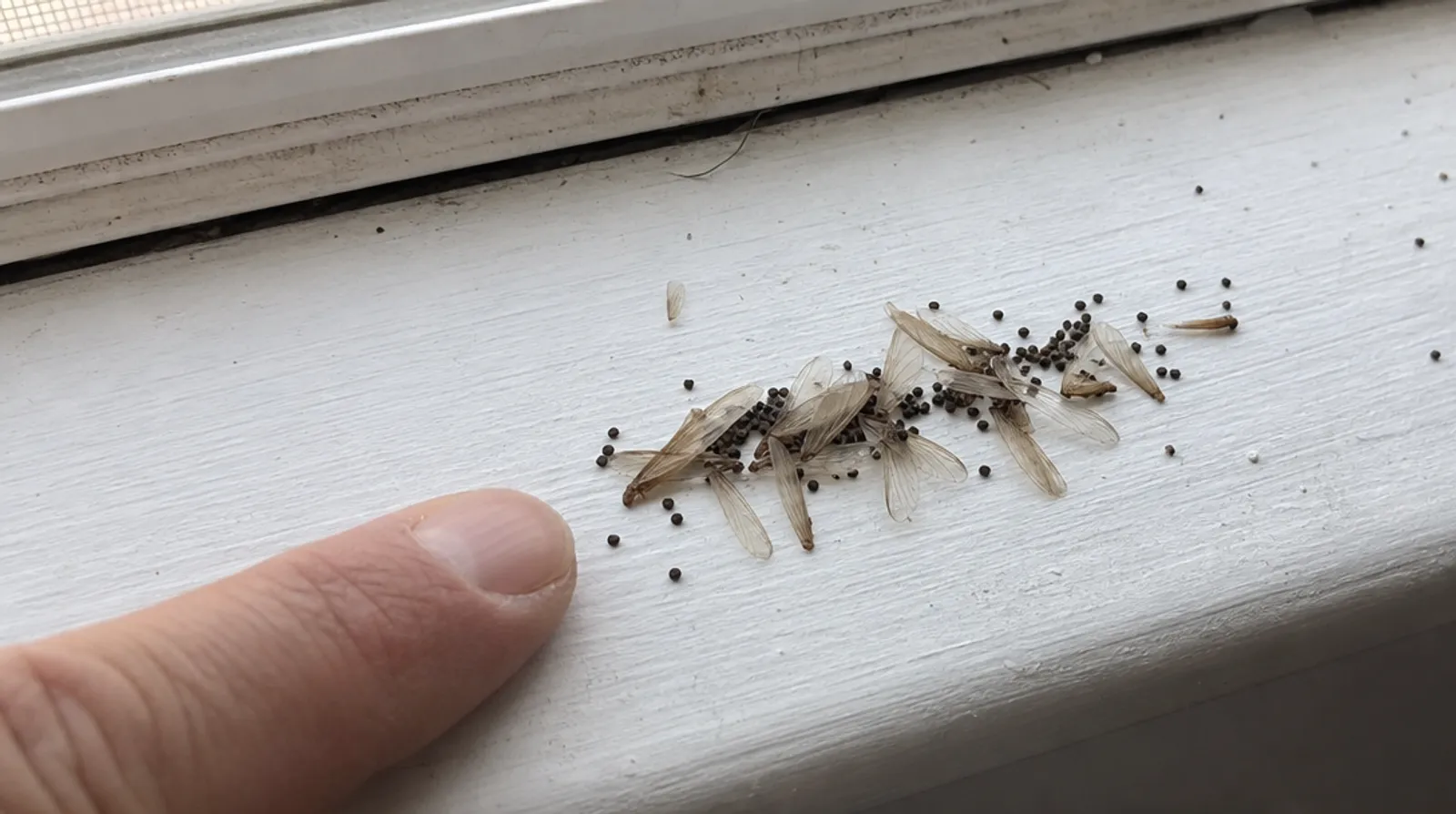
Termite droppings — called frass — are the fecal pellets of drywood termites: hard, six-sided granules about 1 mm long, tan to dark brown, collecting in small piles on windowsills, floors and furniture directly below infested wood. Finding frass means a live colony is feeding inside the wood above the pile. Do not throw the evidence away: photograph it, then book a professional inspection ($75–$250) to confirm the species and scope treatment.
Termite droppings have a proper name — frass — and in American homes they mean one thing almost every time: drywood termites. These termites live their entire lives inside the wood they eat, and since they cannot leave waste lying in their galleries, they push it out through pin-sized exit holes. The result is a small, telltale mound of pellets on whatever surface happens to be below.
Subterranean termites — the group responsible for most structural damage nationwide — do not leave visible droppings at all. They pack their waste into their mud tubes and gallery linings as building material, which is why their signature sign is earthen tubing on foundations rather than pellets on a windowsill (all five signs side by side are in our signs of termites guide). So a pile of frass narrows the suspect list immediately: you are almost certainly looking at a drywood colony, and that shapes everything from the inspection to the treatment quote.
What Do Termite Droppings Look Like?
Frass is one of the most identifiable pieces of pest evidence in a home, once you know the four attributes:
- Size. Each pellet is about 1 mm long — comparable to a grain of coarse sand, a poppy seed or the tip of a mechanical pencil lead. Anything powdery or anything larger than a sesame seed is probably something else.
- Shape. This is the giveaway. Drywood termite pellets are hexagonal — six-sided, with rounded ridges and dimpled ends — and remarkably uniform. Under a magnifying glass or a phone camera zoomed in, a pile of frass looks like a heap of tiny identical wooden beads, not like random dust.
- Color. Frass takes the color of the wood being digested: cream and light tan from pine trim, reddish brown from hardwoods, dark brown to nearly black from older or stained wood. A single pile is usually one consistent color; mixed colors in one spot suggest more than one feeding site above.
- Texture. Hard, dry and gritty. Rolled between two fingers, a frass pellet holds its shape like a grain of sand; sawdust smears, and carpenter ant debris crumbles into splinters.
Where to look
Frass obeys gravity, so the pile always sits directly below the infested member. The classic locations:
- Windowsills and window trim — the single most common spot, because drywood swarmers enter around windows and the sill catches whatever falls.
- Baseboards and flooring under door frames and wall studs.
- Attics — on top of stored boxes, insulation or the drywall ceiling, below rafters and sheathing.
- Furniture — piles inside cabinets, under wooden chairs or beneath antiques; furniture-borne colonies are a common way drywood termites enter a house.
- Kick-out holes. Look a few inches above any pile for a hole the size of a pinprick, sometimes plugged with a pellet. That hole is the colony’s waste chute and confirms the identification.
The most useful field test: vacuum the pile away and check the spot in a week. Fresh pellets reappearing in the same place means the colony is alive and feeding right above your head.
Frass vs Sawdust vs Ant Debris
Most “termite droppings” photos sent to inspectors turn out to be one of three lookalikes. The differences are consistent:
| Termite frass | Sawdust (construction) | Carpenter ant debris | Cockroach droppings | |
|---|---|---|---|---|
| Shape | Uniform six-sided pellets, ~1 mm | Irregular splinters and shreds | Coarse, uneven shavings | Cylindrical ridges (large roaches) or black specks like ground pepper (small roaches) |
| Texture | Hard, gritty, holds shape | Soft, powdery, smears | Fibrous, crumbles | Smears or sticks; soft when fresh |
| Composition | Pure digested wood | Raw wood only | Wood shavings mixed with insect parts — legs, wings, body segments | Fecal matter, often with staining on surfaces |
| Where it lies | In mounds directly below kick-out holes in wood | Near recent drilling, sanding or cutting; scattered | Below baseboards, in window tracks, near damp wood | Along baseboards, in cabinets, behind appliances — not in neat mounds |
| Color | Matches the wood being eaten | Matches freshly cut wood | Mixed light shavings with dark insect fragments | Dark brown to black |
Two quick rules of thumb. First, if the pile contains insect legs or wing fragments, it is ants, not termites — carpenter ants are tidy housekeepers that eject both excavated wood and colony trash through the same openings, and our termites vs ants guide covers telling the insects themselves apart. Second, if there is no wood directly above the pile, it is not frass — droppings in the middle of a kitchen floor with cabinets nearby point to cockroaches, not termites.
Is Frass Dangerous?
The droppings themselves are essentially harmless. Frass is desiccated, processed wood fiber — drywood termites extract moisture so efficiently that the pellets come out nearly sterile. Frass is not toxic, it is not a documented disease vector, and incidental contact or a few pellets on a countertop poses no meaningful health risk. People with asthma or dust allergies should avoid stirring piles into the air, and gloves plus hand-washing are sensible when handling any pest evidence, but that is ordinary hygiene rather than a termite-specific hazard.
The danger is what the pile announces. Frass is produced continuously while a colony feeds, and drywood colonies work slowly but persistently — over years, galleries hollow out rafters, trim and furniture from the inside while the surface looks untouched. A mound of frass is therefore best read as a smoke alarm, not a fire: the pellets will not hurt you, but the colony making them is damaging the structure.
Should you clean it up?
Yes — but on a schedule. Vacuum the pile with a crevice tool, wipe the surface, and seal the vacuum contents in a bag. What you should not do is scrub the area spotless and forget about it before anyone looks at it. The location of the pile, its size and how fast it regrows are exactly the evidence an inspector uses to locate the colony and judge how long it has been active. Photograph every pile before cleaning, and save a teaspoon of pellets in a small bag or jar — species-level identification from frass alone is often possible.
What to Do If You Find Frass
Work through four steps, in order:
- Document, then monitor. Photograph each pile with a coin or ruler for scale, note the date and location, and check what is directly above — a kick-out hole, a blistered spot in the paint, a length of trim. Vacuum the pile and see whether it returns within a week; regrowth confirms live activity.
- Get a professional inspection. A licensed termite inspection typically costs $75–$250, and many companies waive the fee if you proceed with treatment. The inspector confirms the species, checks the attic and other likely sites for additional colonies — drywood infestations are rarely limited to the one spot you noticed — and puts findings in writing.
- Choose the treatment that matches the scope. Drywood termites are not treated with soil barriers; the two mainstream options are localized (spot) treatment — injecting or replacing infested wood when the colony is contained — and whole-structure fumigation, typically $2,000–$8,000, when colonies are widespread or unreachable. The trade-offs are covered in our termite fumigation guide, and the biology behind why drywood work differs from subterranean work is in drywood termites.
- Fix the entry points. After treatment, screen attic and crawl-space vents, seal gaps around window and door frames, and be cautious with second-hand wooden furniture — a single infested piece can restart the cycle.
One scenario deserves urgency: frass appearing in several unrelated rooms at once, or piles large enough to reappear within a day or two. That pattern suggests multiple established colonies rather than one new one, and it pushes the decision strongly toward whole-structure treatment rather than spot work. It is also the pattern familiar to homeowners in Florida, coastal California, Hawaii and the Gulf states, where drywood pressure is highest — local species and seasons are covered in our state termite guides.
Whatever you find, resist the two common mistakes: spraying the kick-out hole with hardware-store insecticide (it kills a few workers and drives the colony deeper into the wood, out of reach of both you and the inspector) and assuming a clean floor means a clean house. Frass is the one sign drywood termites cannot hide — use it.
Frequently asked questions
What do termite droppings look like?
Are termite droppings harmful to humans?
Do subterranean termites leave droppings?
What is the difference between termite frass and sawdust?
Does finding frass mean an active infestation?
How do I clean up termite frass?
Last updated: 2026-08-24