Termite Tenting & Fumigation: Cost, Prep, Timeline
Quick answer
Tent fumigation costs $1,500–$8,000 for most homes, priced by cubic volume. The house is sealed under a tent, filled with sulfuryl fluoride gas and aerated — you are out for 2–3 days. It is the only treatment guaranteed to kill every drywood termite in the structure, but it leaves no residual protection.
Tenting is the most dramatic tool in termite control: the entire house wrapped, gassed and aerated over a long weekend. For widespread drywood infestations it is also the only tool that reaches termites hiding inside walls, furniture and framing at once.
This guide covers what fumigation costs and how the price is calculated, the full prep checklist, the day-by-day timeline, and the safety and re-entry rules — plus the situations where a cheaper local treatment does the same job.
What Is Termite Fumigation?
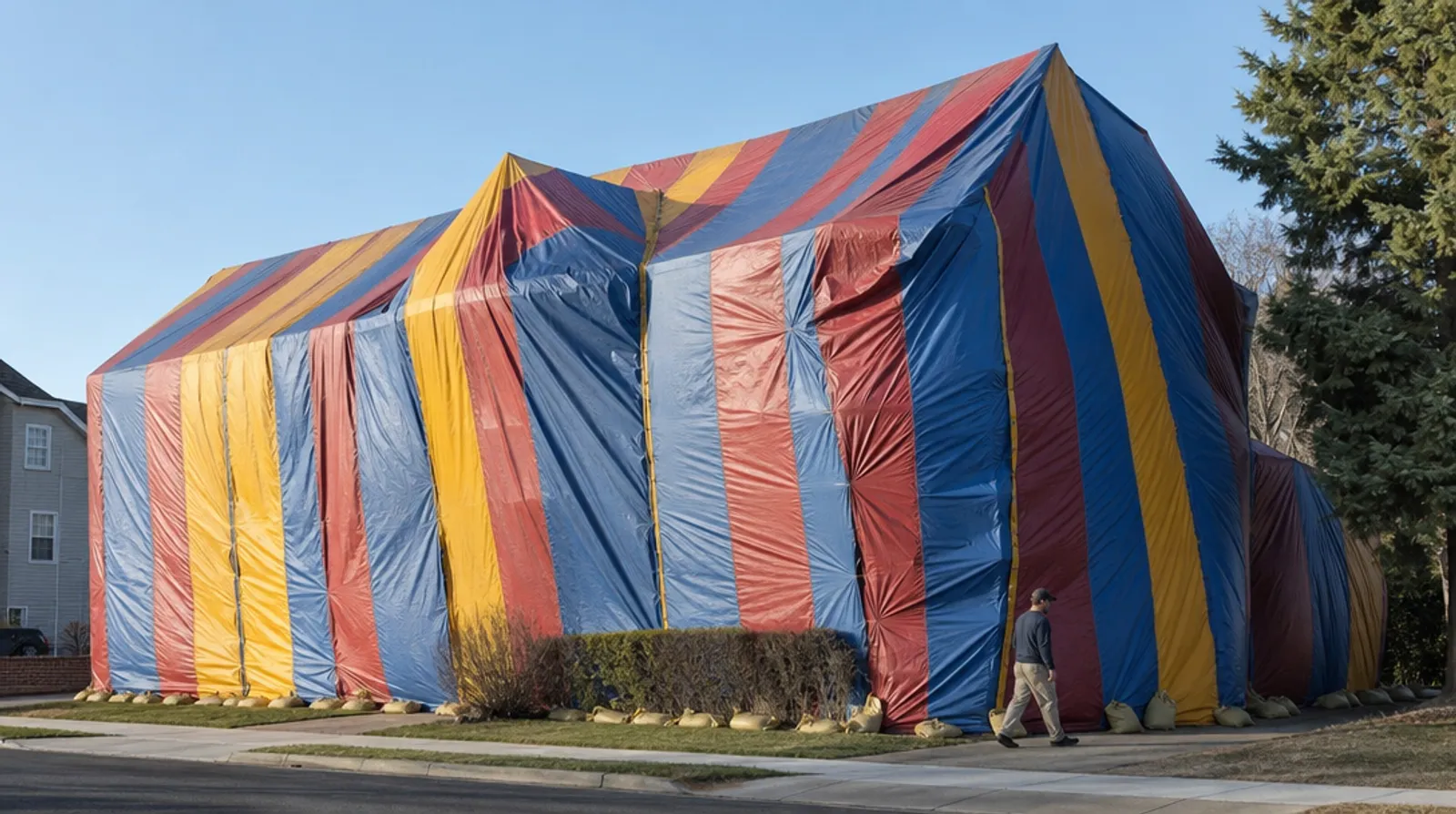
Fumigation — commonly called tenting — is a whole-structure treatment. A licensed crew seals the building under heavy tarps (the “tent”), releases a fumigant gas, and lets it circulate until it penetrates every wall void, joist and piece of furniture. The standard fumigant in the US is sulfuryl fluoride, an odorless gas; crews add a tiny amount of chloropicrin, a tear-gas-like warning agent, so nobody can stay inside without knowing it.
Because the gas reaches everywhere at once, tenting is the only method that can guarantee a 100% kill of drywood termites in a single treatment — including colonies hidden in attic framing, subfloors and furniture that no drill-and-inject spot treatment can find. If you are not sure which species you have, our types of termites guide walks through the differences, and signs of termites covers what an infestation looks like before you commit to anything.
Termite Tenting Cost
Termite tenting cost is priced by the volume of the structure (cubic feet under the tent), not just square footage — a vaulted ceiling or attached garage raises the price. Most homeowners pay $1,500 to $8,000, with $1–$2 per square foot of living space as a working average.
| Home size | Typical tenting cost |
|---|---|
| 1,000 sq ft (condo, small bungalow) | $1,000 – $2,000 |
| 1,500 sq ft | $1,500 – $3,000 |
| 2,000 sq ft | $2,000 – $4,000 |
| 2,500 sq ft | $2,500 – $5,500 |
| 3,000+ sq ft | $3,500 – $8,000+ |
What moves the price within that range:
- Cubic volume — vaulted ceilings, attics, crawl spaces, attached garages and decks all get tented and billed.
- Infestation severity — heavy or multi-colony infestations may call for a higher gas dosage rate.
- Location — tenting is most common (and most competitively priced) in drywood-heavy states like Florida, California and Hawaii; in states where it is rarely done, fewer crews means higher quotes. Rules and licensing differ by state — see our state termite guides.
- Roof and access — steep tile roofs and tight lot lines slow the tenting crew down.
- Warranty — a one-year re-treatment warranty is often included; longer coverage costs extra.
For context on the full price landscape — spot treatment, soil treatment, bait systems — see how much termite treatment costs.
When Is Tenting Necessary?
Tenting is the standard recommendation when drywood termites are found in several locations, in inaccessible framing, or when previous spot treatments have failed. A drywood colony lives entirely inside the wood it eats, so gas is the only way to reach every pocket at once.
Do you have to tent for drywood termites? Not always. A single, accessible infestation — one window frame, one piece of furniture — can often be handled with a localized treatment for a few hundred dollars. The decision hinges on how many infestation sites an inspection turns up and whether they are reachable.
Tenting for subterranean termites is usually the wrong tool. The gas kills subterraneans caught inside the structure, but the colony lives in the soil outside and simply sends workers back in. Subterranean infestations call for liquid soil treatment or bait stations — the trade-offs are in our liquid vs. bait comparison and the broader termite treatment guide.
Termite Treatment Without Tenting: No-Tent Alternatives
If an inspection shows a limited or accessible problem, these are the realistic alternatives:
| Method | Typical cost | Best for | Limitations |
|---|---|---|---|
| Tent fumigation | $1,500 – $8,000 | Widespread drywood infestations | 2–3 days out, no residual |
| Heat treatment | $1,000 – $4,000 | Whole-room or whole-house drywood control without chemicals | Can damage heat-sensitive items; no residual |
| Spot / local treatment (foam, dust, injection) | $225 – $900 per area | One or two accessible colonies | Misses hidden colonies; repeat visits common |
| Orange oil | $400 – $1,500 | Small, accessible drywood galleries | Works only where directly injected |
| Bait stations / soil treatment | $800 – $3,500 installed | Subterranean termites | Not effective against drywood species |
The honest trade-off: every no-tent alternative is cheaper up front but covers less ground. Spot-treating a widespread infestation two or three times often ends up costing more than tenting once — and the termites keep eating in between.
How to Prepare for Termite Tenting
The fumigator hands you a prep checklist; plan on most of a day to complete it. The universal items:
- Remove all people and pets for the full treatment window — including fish, birds, reptiles and anything else that breathes. Aquariums cannot be sealed.
- Remove or double-bag food and medicine. Anything not factory-sealed in glass, metal or unopened rigid plastic must go into the special fumigation bags the crew supplies (Nylofume-type bags) or leave the house. This includes pet food, tobacco, spices and open fridge items.
- Take out houseplants — the gas kills them.
- Strip waterproof-covered mattresses and pillows (baby crib mattresses especially) or remove them — the covers trap gas.
- Trim plants and move gravel back from the foundation so the tarps can seal to the ground; unlock gates and fences for the crew.
- Shut off gas service — many fumigators coordinate this with the utility; confirm who handles it.
- Open interior doors, cabinets and drawers so gas reaches every void; remove vehicles from attached garages and driveways under the tent footprint.
- Plan for 2–3 nights away, plus boarding for pets.
The Fumigation Timeline: Day by Day
Day 1 — tenting and gas release (4–8 hours). The crew covers the structure with tarps, clamps and sand-filled “snakes” seal the edges, warning signs go up, and a licensed applicator releases the fumigant. Doors are secured with secondary locks.
Day 1–2 — exposure (18–24 hours). The gas circulates at a calculated concentration. Nobody enters; the property is posted and locked.
Day 2–3 — aeration and clearance. Tarps come off, the house is opened and ventilated, then the crew tests the air in every room with a sensitive detection device. Only after readings confirm the gas has dissipated below the safe threshold do they post clearance and let you back in. Total time out of the house: typically 2–3 days.
Is Termite Fumigation Safe?
Done by a licensed crew, yes — with strict rules. Sulfuryl fluoride is toxic to anything breathing during exposure, which is why tenting is one of the most regulated procedures in pest control: only licensed fumigators can buy and apply it, the structure is posted and locked, and re-entry happens only after instrument-tested clearance, not guesswork.
After aeration the gas dissipates completely — it does not cling to surfaces, dishes or fabrics, and no washing or wipe-down is required once clearance is posted. The trade-off for that clean exit is zero residual: nothing in the house stops the next swarmers from moving in. Many homeowners pair tenting with a termite bond or an annual inspection plan for exactly that reason.
Questions to Ask a Fumigation Company
Before signing, ask every bidder:
- Are you licensed for structural fumigation in this state, and what is the license number? (Every state has an online license lookup — our state guides link to the registries.)
- What fumigant and dosage rate will you use, and how is it calculated for my home’s volume?
- Is clearance testing with a detection device included before re-entry — and will I get it in writing?
- What does the warranty cover — re-treatment only, or damage repair too — and for how long?
- Who handles gas shut-off, and what prep work does your crew do versus what falls on me?
- If the inspection found subterranean termites too, what soil treatment do you recommend alongside tenting?
Get at least two or three written quotes — prices for identical houses vary widely between crews.
Termite Fumigation FAQ
How long does termite fumigation take?
Plan on 2–3 days out of the house: day one for tenting and gas release, 18–24 hours of exposure, then aeration and clearance testing before you can return. Pets, plants and unsealed food must leave or be specially bagged.
Does fumigation kill subterranean termites?
It kills the ones inside the structure but not the colony in the soil — they return through the ground. Subterranean infestations call for soil treatment or bait systems; fumigation is primarily the drywood solution.
Is termite tenting covered by homeowners insurance?
Almost never. Standard homeowners policies exclude insect damage and the cost of extermination, treating termites as preventable maintenance. Some termite bonds include repair coverage — check the contract terms before assuming you are protected.
Is termite fumigation safe for pets?
Yes, provided every animal — fish, birds and reptiles included — is removed before the gas is released and stays out until the crew’s clearance testing confirms safe air levels. Aquariums cannot be sealed up, so the fish must leave the house entirely.
Do you have to tent a house for drywood termites?
Not always. A localized infestation caught early can sometimes be handled with spot treatment, foam injection, or heat. Tenting becomes the reliable choice once termites show up in multiple rooms, inaccessible framing, or keep returning after spot work.
Does fumigation prevent termites from coming back?
No. Sulfuryl fluoride dissipates completely and leaves zero residual protection — new drywood swarmers can re-infest the same house the following season. Pairing fumigation with a termite bond or annual inspections is the standard follow-up.
What do I have to remove or bag before tenting?
All people, pets and houseplants leave the home. Food, medicine, tobacco and pet food must be removed or sealed in special fumigation bags unless factory-sealed in glass, metal or unopened rigid plastic. Mattresses and pillows with waterproof covers come off the beds, and gas service is shut off for the duration.
Fumigation prep checklist
The universal prep items for tent fumigation. Check things off as you go — progress is saved in this browser. Your fumigator's own list overrides anything here.
People, pets, plants
Food and medicine
Inside the house
Outside and utilities
Frequently asked questions
How long does termite fumigation take?
Does fumigation kill subterranean termites?
Is termite tenting covered by homeowners insurance?
Is termite fumigation safe for pets?
Do you have to tent a house for drywood termites?
Does fumigation prevent termites from coming back?
What do I have to remove or bag before tenting?
Last updated: 2026-08-21