Termite Treatment: Methods, Options & What Works
Quick answer
There is no single best termite treatment — the right method depends on the species: liquid soil barriers and bait systems for subterranean termites, fumigation or heat for drywood infestations. Most homes pay $225–$2,500; whole-structure fumigation runs $1,500–$8,000.
Termites cause billions of dollars in structural damage to US homes every year, and nearly every infestation falls into one of four treatment paths: liquid soil treatment, bait station systems, fumigation, or local spot and heat treatments.
This guide walks through each method — how it works, which termite species it handles, what it costs and how long the protection lasts — so you can compare quotes on substance instead of sales pitch. For current numbers, see the termite treatment cost guide; for the head-to-head on the two most common options, see bait stations vs liquid treatment.
First Step: Identify the Termite Species
Treatment that works on one species can be nearly useless on another, so any reputable company starts with an inspection before quoting a method. The two groups that matter for treatment decisions:
- Subterranean termites (including aggressive Formosan termites) live in soil colonies and travel into the house through mud tubes. Treatment targets the soil and the colony itself.
- Drywood termites live entirely inside the wood they eat — no soil contact, no mud tubes. Treatment targets the infested wood or the whole structure.
If you’re not sure what you have, start with the types of termites guide and the signs of termites checklist, then confirm with a professional inspection — most companies offer one free or for $75–$250.
Termite Treatment Methods Compared
| Method | Best for | Typical cost | Protection lasts |
|---|---|---|---|
| Liquid soil treatment | Subterranean | $4–$16 per linear ft ($800–$2,500 avg) | 5–10 years |
| Bait station system | Subterranean | $7–$12 per linear ft installed + monitoring | Ongoing, while monitored |
| Fumigation (tenting) | Drywood, whole house | $2,000–$8,000 | Kills present colony; no residual |
| Heat treatment | Drywood, localized or whole house | $800–$2,500 | No residual |
| Spot / wood treatment | Small, localized drywood | $225–$900 | Treated area only |
Prices are national averages for orientation — actual quotes vary with home size, construction, region and infestation severity.
Liquid Soil Treatment (Termiticide Barrier)
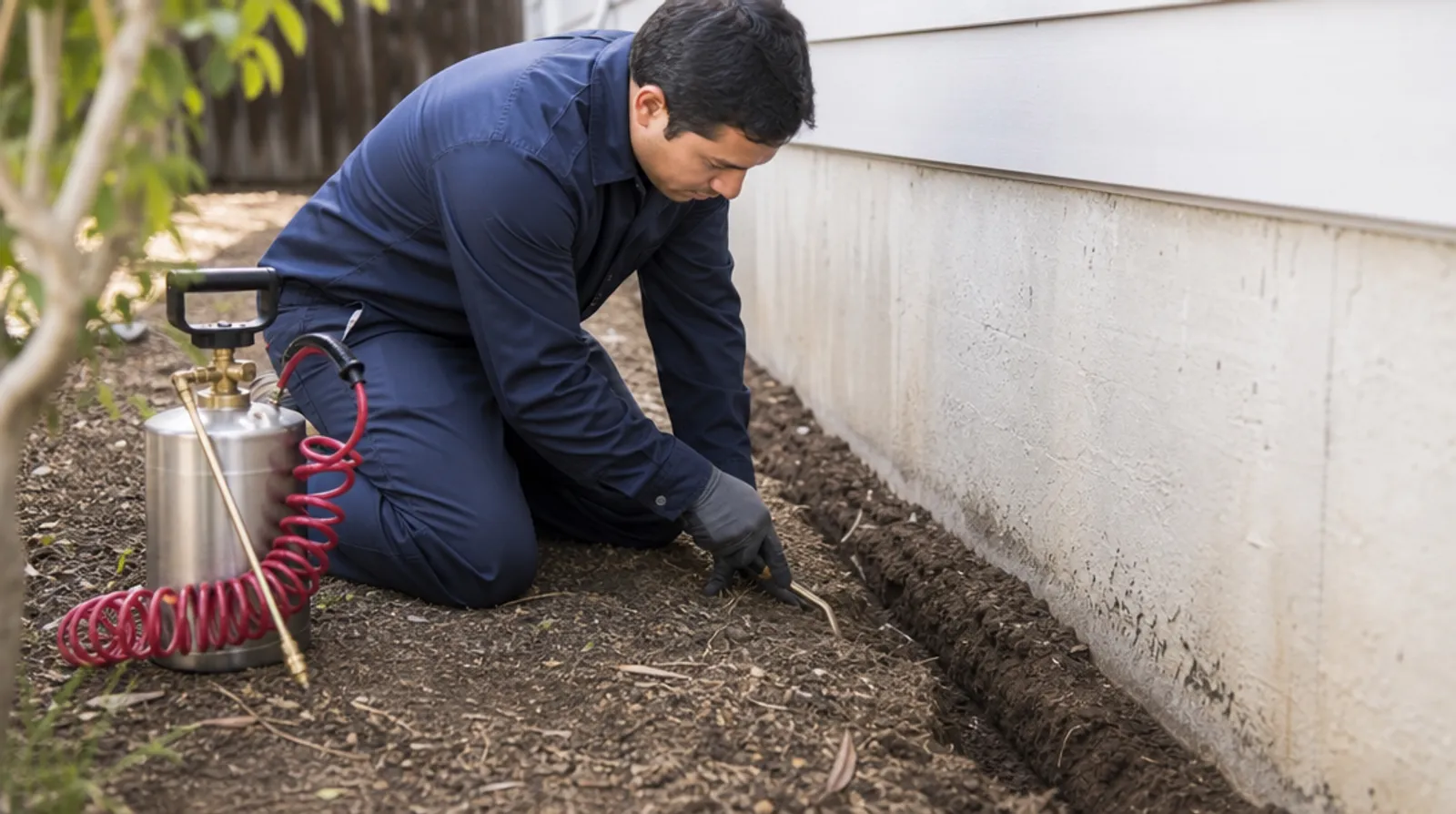
The workhorse for subterranean termites. A crew trenches or drills around the foundation and applies a liquid termiticide to the soil, creating a continuous treated zone. Modern non-repellent products (fipronil, imidacloprid and similar actives) are undetectable to termites — workers pass through, carry the active ingredient back and spread it through the colony.
Expect trenching around the perimeter, drilling through slabs or patios where needed, and patching afterward. Done correctly, a barrier typically protects for 5–10 years. The main weaknesses: gaps in the treated zone (a common cause of failure and a reason to ask how the company handles plumbing penetrations and adjoining slabs) and the need for re-treatment down the road.
Termite Bait Station Systems
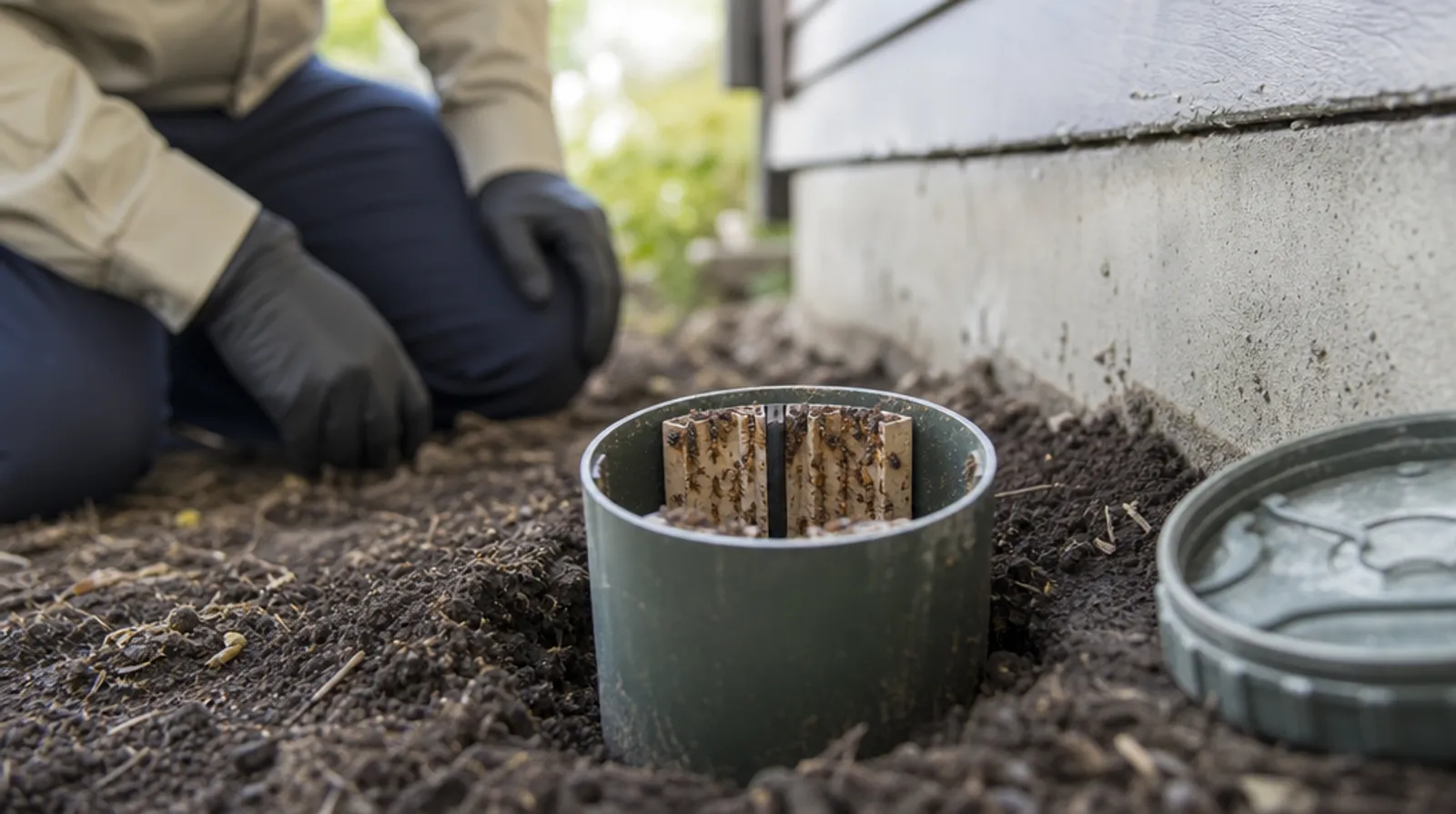
Bait systems place monitoring stations in the ground around the home’s perimeter. When termites are found feeding, the station is loaded with a slow-acting growth-regulator bait that workers carry back to the colony, eliminating it over weeks to months.
Baiting costs more over time than a one-time liquid treatment because it includes ongoing monitoring visits, but it’s the cleaner option where trenching is impractical (wells, drainage issues, extensive hardscaping) or where homeowners want minimal pesticide volume in the soil. The trade-off: protection only lasts as long as the stations are serviced, and colony elimination is slower than a liquid knockdown. Our liquid vs bait comparison breaks down when each makes sense.
Fumigation (Tenting)
For widespread or hard-to-reach drywood infestations, whole-structure fumigation is the only method guaranteed to reach every gallery — including colonies hidden inside walls, attics and furniture. The house is sealed under a tent and filled with a fumigant gas; you, your pets and your plants stay out for 2–3 days.
Fumigation kills everything inside but leaves zero residual protection, so drywood termites can re-infest from neighboring wood later. Costs typically run $2,000–$8,000 depending on home size. Prep, timeline and safety details are in the termite tenting and fumigation guide.
Heat Treatment
Whole-structure or room-level heat treatment raises the temperature of the wood to roughly 120–130°F, lethal to termites and eggs, with no chemicals and no overnight vacancy — most jobs finish in a day. It’s a strong option for localized drywood infestations or for households avoiding fumigants, but like fumigation it leaves no residual protection, and heat can damage sensitive items (electronics, certain plastics, artwork) that must be removed first.
Spot and Wood Treatments
For a small, confirmed drywood infestation in accessible wood — a window frame, a piece of furniture, one section of fascia — localized treatment can be enough: injecting termiticide foam or dust into galleries, treating wood with borate solutions, or replacing the damaged member entirely. Spot treatment is the cheapest path ($225–$900 typical) but only works when the infestation is truly contained, which is why a thorough inspection matters before anyone sells you on it.
Pre-Treatment for New Construction
If you’re building rather than treating an existing home, pre-construction soil treatment (applied to the ground before the slab is poured) is standard practice in most termite-prone regions and is often required by local code or lenders. It costs a fraction of post-construction treatment and is the cheapest termite protection a house will ever get.
Which Termite Treatment Is Best?
There is no universal winner — there’s a best match per situation:
- Subterranean termites, typical home: liquid soil barrier for fast, long-lived protection; bait system where trenching is impractical or continuous colony monitoring is preferred.
- Formosan termites: aggressive combination approach — soil treatment plus baiting — because colonies are large and persistent.
- Drywood, one or two accessible spots: spot treatment or localized heat.
- Drywood, widespread or hidden: whole-structure fumigation (or whole-house heat where available).
- Active infestation plus long-term protection: treatment now, then a termite bond covering re-treatment and, on better contracts, repair.
Rules and licensing for pest control companies vary by state — see our state termite guides for local licensing, typical prices and species in your area.
What Does Termite Treatment Cost?
For most homes, professional termite treatment costs $225 to $2,500, with the national average around $600–$900 for a standard liquid treatment on a mid-size home. The big outliers are fumigation ($2,000–$8,000) and multi-year bait system contracts. A termite inspection typically runs $75–$250 and is often credited toward treatment. Full breakdowns by method, species and home size are in the termite treatment cost guide.
DIY vs Professional Treatment
Hardware-store termite products — sprays, foams, stakes — have a legitimate role in prevention and small drywood spots. They do not reliably eliminate a subterranean colony, which lives underground in numbers most homeowners underestimate, and repellent DIY sprays can actually split a colony into harder-to-find satellite colonies. If you’ve confirmed subterranean activity (mud tubes, swarmers indoors, damaged wood with soil in it), professional treatment pays for itself; our DIY vs professional guide walks through the decision.
Questions to Ask a Termite Company
Before signing anything, ask:
- What species did you find, and where is the evidence?
- Which treatment method are you proposing, and why this one over the alternatives?
- Is the quote all-inclusive (drilling, patching, re-treatment if activity returns)?
- How long is the warranty, is it transferable, and does it cover damage repair or only re-treatment?
- Are you licensed in this state, and can I verify the license number?
- For bait systems: what’s the monitoring schedule and the annual fee after year one?
Get at least two or three written quotes. Price differences of 30–50% between companies for the same method are common, and the answers to the questions above usually explain why.
Frequently asked questions
What is the most effective termite treatment?
How long does a termite treatment last?
How long does termite treatment take?
Is termite treatment covered by homeowners insurance?
Is termite treatment safe for pets and children?
Can I sell a house with termites?
Can I treat termites myself?
Last updated: 2026-08-19