Termite Damage vs Wood Rot: How to Tell the Difference
Quick answer
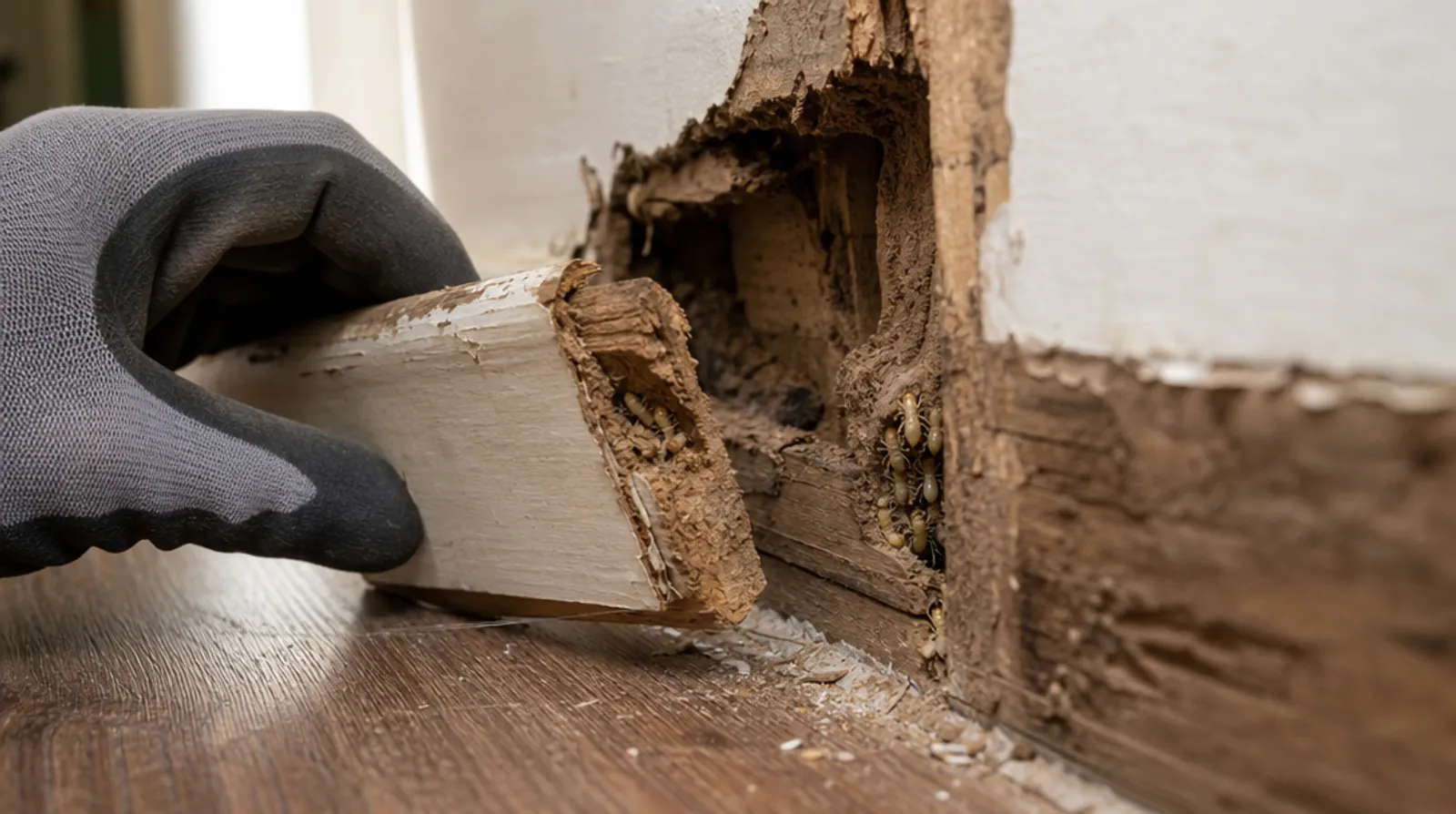
Termite damage hollows wood into galleries that run along the grain, often packed with mud or left with pellet-like droppings, and the wood sounds hollow when tapped. Wood rot — a fungus — makes wood spongy, crumbly or cracked into cubes, usually with discoloration and a musty smell. The difference matters because the fixes are unrelated: termites require killing a colony, while rot requires removing the moisture source and replacing the wood.
Soft, damaged wood around a leak, a crawl space or a bathroom floor sends most homeowners to the same question: termites or rot? The two problems look similar from the outside, they favor exactly the same damp locations, and they frequently show up together — termites find it easier to chew wood that moisture has already softened.
But they are different problems with different causes, and they demand different responses. One is an insect colony that keeps eating until it is killed; the other is a fungus that stops the moment its moisture supply does. Misidentify them and you either pay for a treatment you don’t need or fix a leak while a colony keeps working.
This guide gives you a side-by-side comparison, a closer look at each type of damage, and the order of operations when a home has both. For the full catalog of warning signs beyond damaged wood, see signs of termites.
Termite Damage vs Wood Rot: Side by Side
| Termite damage | Wood rot | |
|---|---|---|
| Cause | Insects — a living colony consuming cellulose | Fungus — decay organisms digesting damp wood |
| Appearance | Galleries hollowed along the grain; subterranean galleries lined with mud, drywood galleries smooth and clean | Wood cracked into cubes across the grain (brown rot) or bleached and stringy (white rot); often darkened or discolored |
| Texture | Hard outer shell over hollow tunnels; collapses in layers when probed | Soft, spongy or crumbly through the whole thickness; mushes when probed |
| Sound | Hollow or papery when tapped | Dull and soft; tapping tells you little |
| Smell | Usually none; occasionally a mild mildew odor from heavy subterranean activity | Distinct musty, mushroom-like odor |
| Moisture | Subterranean termites need moisture and bring it with them; drywood termites attack dry, sound wood | Requires sustained moisture (roughly 20%+ wood content) — fix the moisture and the rot stops |
| Telltale extras | Mud tubes on foundations, frass pellets, swarmers or discarded wings | Visible fungal growth, sometimes mushroom-like fruiting bodies; no insects, no galleries |
| Where it shows up | Anywhere wood is reachable from soil or a nest — sill plates, joists, studs, trim, furniture | Chronically wet spots: around leaks, under sinks, at window sills, deck posts, crawl spaces with poor ventilation |
The single fastest field test: press a screwdriver into the wood. Termite-damaged wood resists, then suddenly collapses into layered tunnels. Rotted wood simply mushes — no structure, no tunnels, no mud.
What Termite Damage Looks Like
Termites eat wood from the inside out, leaving a thin veneer of intact surface — which is why damage often appears “suddenly” after years of hidden feeding. Subterranean termites follow the grain and pack their galleries with soil and fecal material; drywood termites carve smoother tunnels across the grain and push out hard, hexagonal droppings called frass, which collect in small piles below the infested wood.
Around the damaged wood itself, look for the supporting evidence: pencil-wide mud tubes climbing the foundation, discarded wings on windowsills after a swarm, bubbling paint with no plumbing leak nearby, and trim that sounds hollow under a screwdriver handle. The full picture — early signs, structural stages, active versus old damage, and repair costs — is in our termite damage guide, and the termite damage repair cost guide breaks down what fixes run.
What Wood Rot Looks Like
Wood rot is fungal decay, and it comes in two common forms worth knowing by sight.
Brown rot
The more common type in homes, sometimes called “dry rot” (a misleading name — it still needs moisture to start). The fungus consumes the cellulose and leaves brown lignin behind, so the wood darkens and shrinks, then cracks across the grain into roughly cube-shaped chunks. Advanced brown rot crumbles to powder between your fingers. It spreads fast in damp, poorly ventilated crawl spaces and around chronic plumbing leaks.
White rot
The fungus consumes lignin as well as cellulose, so the wood keeps its shape longer but turns pale, bleached or grayish and feels fibrous or stringy — like a wet rope — rather than crumbly. White rot is common on deck boards, door thresholds and wood exposed to weather.
Both types share the defining trait: the damage stops spreading once the wood dries out, because the fungus cannot colonize dry wood. That is the opposite of termites, which keep eating regardless once established.
Why the Difference Matters
The two problems have almost nothing in common when it comes to fixing them.
If it’s rot, insecticides are useless — there is nothing to kill. The correct response is to find and eliminate the moisture source (a leak, condensation, wood-to-soil contact, poor crawl-space ventilation), then cut out and replace the compromised wood. Catch it early and rot is often the cheaper problem; ignore the moisture and it returns in the new lumber.
If it’s termites, replacing wood without treating the colony just serves fresh lumber to live insects. Treatment comes first — typically $225–$2,500 for liquid or bait methods on an average home — and repair follows a confirmed kill, not the other way around.
There is also a coverage angle homeowners learn too late. A termite bond covers termites — retreatment, and on better contracts repair of new termite damage — but it does not cover rot, and most bonds go further: moisture problems like leaks and wood-to-soil contact are standard exclusions that can void the termite coverage itself. Homeowners insurance, meanwhile, generally excludes both as gradual, preventable damage. Neither problem comes with a safety net, which is why correct identification is worth real money.
Can You Have Both at Once?
Yes — and in damp crawl spaces it’s common. Moisture softens wood and feeds the fungus; the softened, wet wood is exactly what subterranean termites prefer, so a colony often moves into wood that rot has already started on. Inspectors in the Southeast see the combination routinely around leaking bathrooms and unventilated crawl spaces.
When both are present, the order of operations matters:
- Inspect. Confirm what is active — live termites, active rot or both — and map the extent. A probing inspection with moisture readings answers this.
- Treat the colony. If termites are live, kill them before touching the wood.
- Fix the moisture. Repair the leak, improve drainage and ventilation, eliminate wood-to-soil contact. This stops the rot and removes the condition that invited the termites.
- Repair the wood. Replace or sister damaged members once both causes are dead. Structural work — joists, sill plates, beams — belongs to a licensed contractor.
Skipping step 3 is the classic mistake: the rot comes back, and so, often, do the termites.
When to Call a Professional
A professional termite inspection typically costs $75–$250, and it is the right first call whenever you find damaged wood you cannot confidently classify — or whenever the damage involves floors, walls or anything load-bearing. Sagging floors, sticking doors throughout the house and visibly eaten framing are not DIY diagnosis territory.
One more scenario deserves a professional on principle: buying or selling a home. The wood-destroying organism report most lenders require — the WDIR, NPMA-33 or termite letter — explicitly covers fungi and wood rot alongside termites and other wood-destroying insects, so rot found at inspection lands in the same report and the same negotiation as termite damage. How that document works is covered in our termite letter guide.
Frequently asked questions
Is wood rot a sign of termites?
Does wood rot attract termites?
Can I treat wood rot myself?
Does homeowners insurance cover wood rot or termite damage?
How do I test wood for termites or rot with a screwdriver?
Do I need a WDO inspection for wood rot?
Last updated: 2026-08-24