Formosan Termites: Identification, Damage & Control
Quick answer
Formosan termites are an invasive subterranean species — the "super termite" — whose colonies number in the millions, roughly ten times a native subterranean colony, and which hollow out structural wood in months rather than years. They are established along the Gulf Coast and in Louisiana, Florida, Texas, Hawaii and the Carolinas. Control combines a liquid soil barrier with bait systems, plus direct treatment of the above-ground carton nests this species builds inside walls.
Formosan termites earned the nickname “super termite” honestly: they are a subterranean termite scaled up by an order of magnitude. Where a native eastern subterranean colony holds a few hundred thousand workers, a mature Formosan colony holds several million — and a colony that size consumes wood fast enough to turn a minor infestation into a structural problem in months, not years.
The species arrived in US ports after World War II, almost certainly in military cargo returning from the Pacific, and it has been spreading through the warm South ever since. This guide covers how to identify it, where it lives, the carton nests that make it uniquely hard to treat, and what control actually costs. For how it compares with the other species that attack US homes, see the types of termites hub.
Identification: What Formosan Termites Look Like
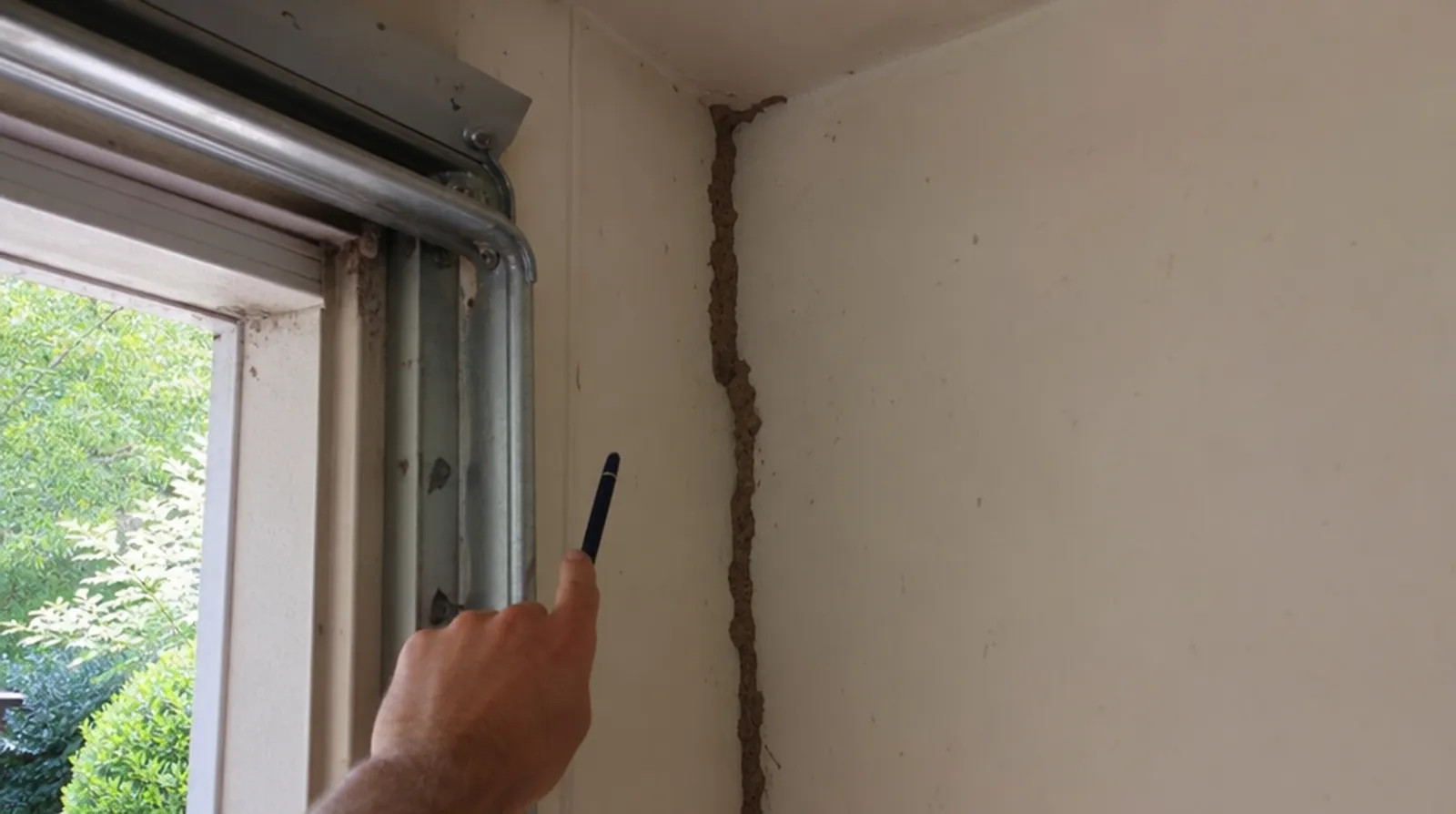
Formosan termites are a subterranean species, so most of what you will ever see is mud tubes and damaged wood — the same evidence as native subterranean termites. The reliable identification comes from the swarmers and the soldiers.
Swarmers (alates)
The winged reproductives are the caste homeowners encounter most:
- Color: yellowish-brown, noticeably lighter than the dark, almost black swarmers of native subterranean termites
- Size: about 1/2 inch long including the wings — larger than native swarmers
- Wings: two equal pairs, densely covered in tiny hairs (visible under magnification), which is a classic field mark
- Behavior: they fly at dusk and after dark, swarm to lights in large numbers, and drop their wings in piles near windowsills and light fixtures
Soldiers
Soldiers confirm the species when an inspector breaks open a tube or gallery. A Formosan soldier has a rounded, orange-brown head — oval rather than the rectangular head of native subterranean soldiers — with a visible pore on the forehead called a fontanelle that exudes a white defensive fluid when the soldier is disturbed. Soldiers also make up a larger share of a Formosan colony, so a gallery crawling with aggressive, big-headed soldiers is itself a hint.
Formosan vs. native subterranean termites
| Trait | Formosan | Native subterranean |
|---|---|---|
| Colony size | 1–10+ million | 100,000–1,000,000 |
| Swarmer color | Yellowish-brown | Dark brown to black |
| Swarm timing | Late spring–summer, at night | Late winter–spring, daytime |
| Above-ground nests | Yes — carton nests in walls | No — needs soil contact |
| Damage speed | Structural damage in months | Structural damage over years |
In practice, homeowners rarely need to make this call themselves — a licensed termite inspection ($75–$250, often free with a treatment quote) settles the species before any treatment is quoted. What matters is that the identification is in writing, because treatment and warranty terms both hinge on it.
Where Formosan Termites Live in the US
Formosan termites are limited by cold: they are established where winters stay mild, which in practice means the Gulf Coast, the deep Southeast and Hawaii.
- Louisiana is the national epicenter. The species entered through the port of New Orleans and is now established in every parish; the New Orleans metro is routinely described as the most termite-infested city in the country. Details in the Louisiana termite guide.
- Florida has heavy and expanding Formosan pressure, concentrated in South Florida — the Miami–Fort Lauderdale–West Palm Beach corridor — and spreading along the coasts. See the Florida guide.
- Texas, particularly the Houston and Gulf Coast areas, carries established populations — the Texas guide covers the local picture.
- Hawaii has some of the heaviest Formosan pressure anywhere; the species is the dominant structural pest on the islands (Hawaii guide).
- South Carolina — especially the Charleston area, another historic port of entry — and North Carolina have established coastal infestations (South Carolina, North Carolina).
- Scattered infestations exist in other southern states, often traced to infested railroad ties, lumber or potted plants moved from established areas.
Isolated colonies occasionally appear further north, but cold winters keep them from establishing. If you are outside the South and Hawaii, Formosan termites are unlikely to be your problem.
Carton Nests: The Trait That Changes Treatment
Native subterranean termites must stay connected to the soil — cut them off from ground moisture and the colony dies. Formosan termites break that rule. Given an above-ground moisture source — a roof leak, a plumbing drip, a sweating AC line — they build carton nests: spongy masses of chewed wood, soil and excrement, sometimes the size of a refrigerator, hidden inside wall voids, attics and roofs.
This has two practical consequences:
- Soil treatment alone may not finish the job. A perfect liquid barrier around the foundation cuts off the ground colony, but an established carton nest with its own moisture source can survive above it. Effective Formosan work often means locating and treating or physically removing the nest itself.
- Moisture control is part of termite control. Fixing leaks and condensation problems does not just prevent rot — it removes the condition that lets a Formosan colony live in your walls independently of the soil.
A thorough Formosan inspection therefore goes beyond the foundation line: attic, roof voids, around plumbing penetrations and anywhere chronic moisture exists.
Swarm Season
Formosan swarmers emerge on warm, humid evenings from late April through July, peaking in May — in Louisiana the first big flights are known locally as “Mother’s Day swarms.” Tens of thousands of alates boil out of mature colonies at dusk and spiral toward streetlights and lit windows, which is why the species is often first noticed as a blizzard of wings around a porch light.
A swarm outdoors is not an emergency — swarmers themselves do not eat wood, and they may have flown in from a neighboring property. But swarmers emerging inside the house, or piles of discarded wings on interior windowsills, mean a mature colony is in or under the structure. Collect a few specimens or wings in a sealed bag for identification and schedule an inspection promptly; in Formosan territory, waiting a season is rarely a good trade. More on reading swarm evidence in the flying termites guide, and on separating swarmers from look-alikes in termites vs. ants.
Formosan Termite Damage
The damage mechanism is the same as any subterranean termite — workers hollow wood from the inside, packing galleries with mud — but the scale is different. A multi-million-worker colony maintains far more foraging territory and can be feeding on a structure at many points simultaneously. Pest professionals in Formosan territory describe cases of load-bearing members compromised within a year or two of infestation; the species has even been documented chewing through soft metals, plastics and asphalt to reach moisture.
Two implications for homeowners:
- Early detection is worth more here than anywhere else. An annual inspection is cheap insurance when the alternative timeline is months, not years. The warning signs are in the termite damage guide and the signs of termites guide.
- Repair bills scale fast. Structural repair on an established Formosan infestation routinely reaches five figures; the benchmarks are in the termite damage repair cost guide.
Treatment & Control
Formosan termites are treated with the same two core methods as other subterranean termites — but applied aggressively, and with the carton-nest problem kept in view.
- Liquid soil treatment. A termiticide barrier trenched and drilled around and under the foundation kills workers commuting between soil and structure and blocks new entry. It is fast-acting and remains the standard first response. Typical cost: $225–$2,500 for an average home, with heavy Formosan jobs at the top of the range.
- Bait systems. Stations installed around the perimeter let foragers carry slow-acting toxicant back to the colony. Given the size of Formosan colonies, baiting is widely used in high-pressure areas both for elimination and for ongoing monitoring.
- Carton nest treatment. Any above-ground nest must be found and treated directly — with injected foam or dust termiticides — or physically removed, and the moisture source feeding it repaired.
The trade-offs between the two main methods are compared in detail in liquid vs. bait treatment, and method-by-method pricing is in the termite treatment cost guide. In heavy-pressure areas, many professionals combine both from the start.
One more control layer deserves emphasis in Formosan territory: the warranty. Some termite bonds exclude Formosan termites specifically or price them as a separate tier — a serious limitation in Louisiana, Florida and the Gulf Coast, where this is the species most likely to cause a claim. Before signing, ask directly whether Formosan termites are covered, whether the contract is retreat-only or retreat-and-repair, and get the answer in writing. Bond pricing runs $500–$1,500 for the initial treatment plus $150–$400 a year to renew; a repair bond with real Formosan coverage is the closest thing to termite insurance a homeowner in the South can buy.
The bottom line: Formosan termites are controllable with standard professional methods, but they punish delay and half-measures harder than any other US species. Confirm the species, treat soil and structure together, fix the moisture, and keep the protection in force.
Frequently asked questions
Are Formosan termites worse than regular termites?
Where are Formosan termites found in the US?
Can Formosan termites be eliminated?
Do Formosan termites swarm at night?
Does a termite bond cover Formosan termites?
How big are Formosan termite colonies?
Are Formosan termites in my state?
Last updated: 2026-08-24